Stories from the community guide

Blog

Guides, seasons and plain answers about life in Achasta. Open any story, or read it right here.

  • What’s Near Achasta in Dahlonega?

    What’s Near Achasta in Dahlonega?

    What is near Achasta in Dahlonega: the town square, the Chestatee River, mountain access, and the everyday geography Achasta residents actually use.

    Read the full guide here
    Quick answer

    Quick answer (TL;DR)

    Achasta sits on the edge of Dahlonega, the Lumpkin County seat, with the Chestatee River along community property and the mountains spreading out beyond town. The nearby geography residents actually use: the historic town square, the river, general mountain access, and the everyday services in and around Dahlonega. Distances and details vary, so treat this as orientation, not a schedule.

    Near Achasta, the Dahlonega town square is the default nearby destination, the Chestatee River runs along community property, and mountain access starts where the valley opens up.

    The orientation, in plain terms

    Achasta sits on the edge of Dahlonega, the seat of Lumpkin County, in the North Georgia mountains. The community holds a valley on the Chestatee River; the town holds its square and the ridges around it. Between the two runs a stretch of road so familiar to residents it stops registering as distance. That geometry, valley community on one end and working mountain town on the other, is the whole story of what is near Achasta.

    This guide is written from the resident side, not the visitor side. The question it answers is not what to see on a weekend trip but what sits around your address on an ordinary Tuesday: where the coffee run goes, where the river walk starts, where the errands happen, and what the mountains around all of it actually give you.

    The squareDahlonega’s living room

    The historic town square, ringed by shops and restaurants, is the town’s default gathering place.

    The riverThe Chestatee at the doorstep

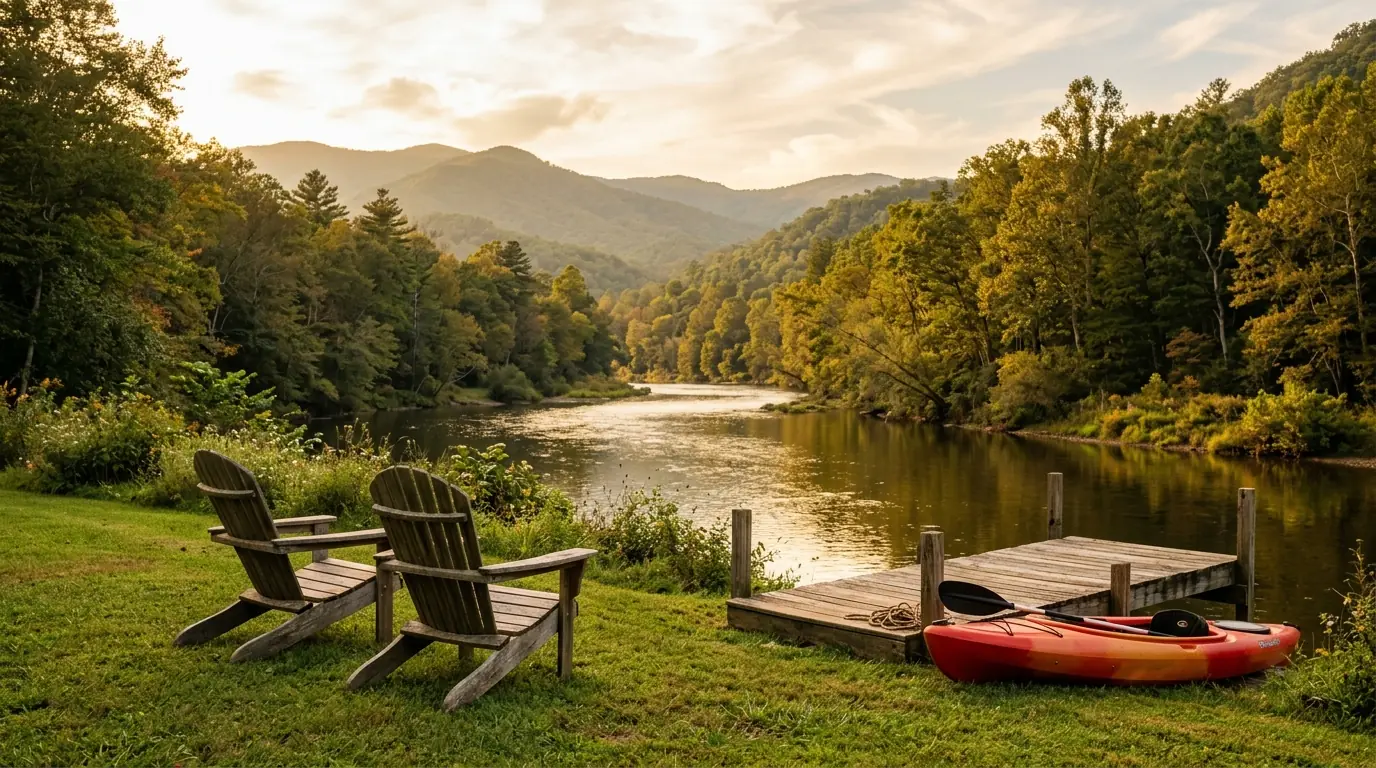
    The river runs along community property and through the area’s outdoor life.

    The mountainsBlue Ridge access

    Public land and mountain roads spread out beyond town in the North Georgia high country.

    The town square and weekly life

    Dahlonega’s public square is the center of gravity. A historic courthouse building sits in the middle of it and houses the Dahlonega Gold Museum, a public landmark that carries the town’s gold-rush story. Shops and restaurants ring the square, and the streets around it are compact enough that a visit becomes a walk rather than a drive. For residents, the square is the default destination: an errand run, dinner out, whatever the day’s agenda requires.

    The University of North Georgia’s historic campus is part of the town itself, and a university does quiet work for the people who live around it. It keeps the town’s restaurants, services, and general rhythm running on a year-round calendar instead of a visitor season, which matters when you live here in February.

    The town’s identity runs back to the 1828-1829 Georgia gold rush, which started in this area, and that history is still the town’s public face: the museum on the square, the gold references on the storefronts, the story every visitor learns on day one. For a resident it becomes background, the way any hometown story does, until guests visit and you find yourself giving the tour again. For the background, read this account of the Dahlonega gold rush.

    Out the other way: river and mountains

    The Chestatee River runs along community property at Achasta and threads the wider area, and it is the outdoor feature residents use most without driving anywhere. Walking the river ground or sitting by moving water is daily-life access, not a planned outing. It changes with the seasons, which keeps it from becoming background. Our piece on how Achasta residents enjoy the Chestatee River covers the river side of the community in detail.

    Beyond the valley, the mountains open up. Public land spreads through the North Georgia high country north and west of town, with hiking, drives, and the seasonal color the region is known for. Residents tend to explore it in the same rhythm as everything else here: steadily, close to home, more often than a trip planner would suggest. The year’s rhythm is covered in the seasons at Achasta.

    A resident’s honesty about mountain geography

    Mountain roads wind, winter weather changes routines for stretches of the season, and travel time varies with route and conditions. None of that is a problem; it is part of living in the mountains. It is worth building your ordinary week with that texture in mind rather than a flat-map estimate of it.

    The everyday infrastructure

    Ordinary life needs ordinary things, and Dahlonega carries them at small-town scale: groceries, pharmacies, hardware, banks, and medical care exist in and around town. For anything the town does not hold, larger communities elsewhere in the region sit within a mountain drive, which is the standard trade-off of living at elevation. If your week depends on a specific service, the move is to check where it actually lives before assuming, the same verification habit that serves people well everywhere in this region.

    This is where the appealing view meets the practical week. The residents who settle in happily here are the ones whose errands fit the town’s scale, and the ones who struggle imagined a version of mountain living that did not include Tuesday.

    How the proximity shapes community life

    Town proximity is quietly one of Achasta’s main amenities. Dinner in town after a day on the course, the square as the default place to walk with guests, a community whose social calendar and the town’s complement each other rather than compete: the relationship works because the town is close and real, not a resort strip. Visitors and family also have an easy base in town, which keeps hosting simple.

    The broader frame is living near a signature golf course in North Georgia, and the resident-side picture of the community itself is living in Achasta. Between the valley, the river, and the square, the geography of daily life here is unusually complete for a mountain address.

    Living at Achasta is a balance: the gates and the valley on one side, a working small town on the other, and a familiar stretch of road between.

    Frequently Asked Questions

    What is near Achasta in Dahlonega?

    The short list: the town of Dahlonega itself, beginning with its historic public square; the Chestatee River, which runs along community property; the mountain and river access of the wider North Georgia high country; and the everyday services of a county seat. It adds up to a complete small-town geography around the community rather than a resort strip.

    How close is Achasta to downtown Dahlonega?

    The community sits on the edge of town, close enough that the square is the default nearby destination for coffee, dinner, and errands rather than a planned trip. Exact travel time depends on route, traffic, and season, so treat that as orientation. The practical point is that town is part of the ordinary week here, not an excursion.

    What is there to do in Dahlonega?

    Walk the historic square and visit the Dahlonega Gold Museum, spend time along the Chestatee, explore the mountain roads and public land of the high country, and sample the area’s well-known winery scene. For current specifics on any attraction, hours, events, or participating businesses, check directly with the town’s visitor resources.

    What is the Dahlonega Gold Museum?

    A public landmark in the historic courthouse building on the town square, telling the story of the Georgia gold rush that began in this area in the late 1820s. It is the town’s signature public attraction and an easy stop whenever guests visit. Confirm current hours and admission directly with the museum before you go.

    Is the University of North Georgia in Dahlonega?

    Yes, the university’s historic campus is part of the town. For residents, its presence keeps restaurants, services, and the general rhythm of the place running year-round rather than on a visitor season, which is a real quality-of-life difference in a small mountain town.

    Can you get to hiking from Achasta?

    Yes, at two scales. Inside the community, trails and the river ground supply the everyday outdoor circuit. Beyond it, the public land of the North Georgia high country spreads out from the area with longer hikes and mountain drives. Current trail details inside the community are best confirmed with community management.

    What river runs through the Dahlonega area?

    The Chestatee River. It flows near town and along Achasta’s community property, and it anchors the outdoor side of life in the area: walking ground, moving water, and a corridor of green through the valley. Our site covers the river side of the community in a dedicated piece.

    Is Dahlonega a walkable town?

    The core of it is. The square and the streets around it are compact and built for strolling, which is why it functions as the town’s living room. Out from the center, the terrain and the distances of a mountain town take over, so plan on walking the middle and driving the edges.

    What is the history of Dahlonega?

    It is the Lumpkin County seat, and its public identity runs back to the 1828-1829 Georgia gold rush, which started in this area. The gold-rush story shaped the town’s architecture, its museum, and its name recognition. It remains the thread visitors know the town by.

    Are there wineries near Dahlonega?

    Yes, the area around Dahlonega is known for a cluster of wineries and tasting rooms, part of the broader North Georgia wine country. It is a standing weekend option for residents and a draw for visiting guests. We do not name or recommend specific businesses; current options are easy to find through the town’s visitor resources.

    Does it snow in Dahlonega?

    Occasionally. At mountain elevation the area gets real winter weather in stretches, enough that residents plan for slow roads and quiet weeks during the coldest part of the year. It is one of the seasonal textures covered in our piece on the seasons at Achasta.

    Ready to buy a home near Dahlonega?

    When the location works for you, Talk with Gold Peach Realty about buying a home in Dahlonega, North Georgia or call (770) 283-1223.
  • Is Achasta a Gated Community in Dahlonega, GA?

    Is Achasta a Gated Community in Dahlonega, GA?

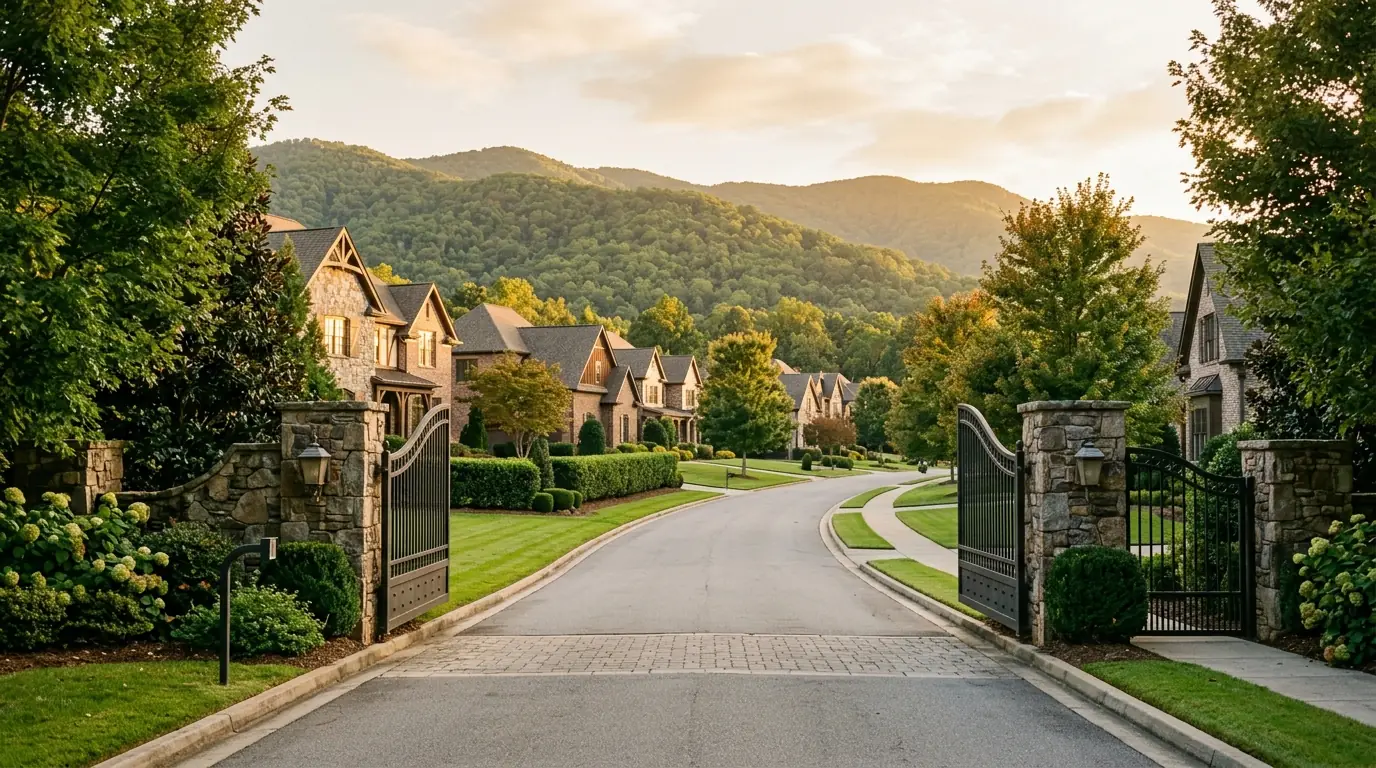
    Achasta is a private gated golf community in Dahlonega, GA. Learn what the gate means for buyers, residents, and daily life in this Jack Nicklaus community.

    Read the full guide here
    Quick answer (TL;DR)

    Yes, Achasta is a gated community in Dahlonega, North Georgia. A staffed entry gate controls access to this private golf community, built around a Jack Nicklaus Signature 18-hole course along the Chestatee River. The gate, HOA, and Architectural Review Board work together to protect community standards and property values. Confirm current gate staffing hours directly with the association before purchase.

    Achasta is a private, gated golf community in Dahlonega, Georgia, built around a Jack Nicklaus Signature 18-hole course along the Chestatee River. A staffed entry gate controls access and works alongside HOA governance to maintain the community’s privacy and character.

    What Makes Achasta a Gated Community?

    A gated community is defined by controlled access: a physical barrier at the entry that manages who comes and goes. Achasta works this way: a staffed gatehouse at the community entrance controls vehicle and pedestrian access for residents, guests, contractors, and service providers.

    That gatehouse is one piece of a larger governance structure. The Achasta homeowners association sets the rules that apply once you’re inside the gates, and its Architectural Review Board oversees exterior changes to maintain the community’s consistent character. Gate, HOA, and ARB together give Achasta the defining qualities buyers expect from a private gated community.

    The gated format is standard among premium golf developments in the Southeast, and Achasta follows that model. Before buying, confirm current gate hours and staffing levels directly with the HOA; those details can change and should not be assumed from a listing description or a community website.

    Inside the Gates: The Jack Nicklaus Course and Chestatee River

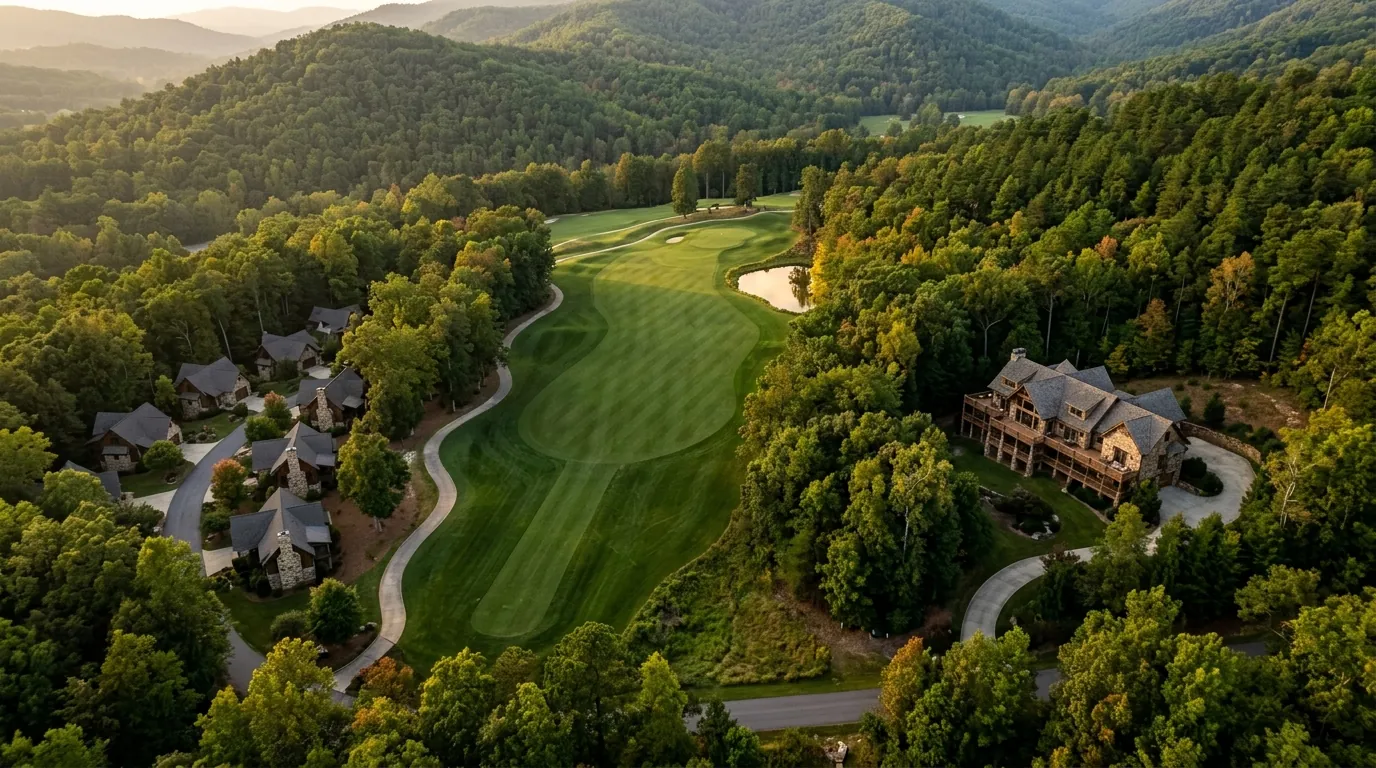
    Achasta’s gates open onto a community shaped around two natural anchors: a Jack Nicklaus Signature 18-hole golf course and the Chestatee River, which runs along the community’s edge through the North Georgia mountains. For most buyers, that setting is what draws them to Achasta in the first place.

    The Jack Nicklaus Signature course is a meaningful credential. Courses bearing the Nicklaus Signature designation follow a specific design approach: strategic shot variety, playability across handicap levels, and layouts that favor thoughtful play over pure length. For residents, having that caliber of course as the community’s centerpiece elevates daily life beyond what most gated communities in the region can offer.

    The Chestatee River provides a natural boundary and a recreational draw. Buyers who value the outdoor character of North Georgia find the river setting reinforces that appeal without requiring a drive outside the gates. The mountain environment that drew them to Dahlonega is part of the community itself.

    Gated EntryStaffed gatehouse manages access for residents and guests
    Jack Nicklaus 18-HoleSignature-designed course at the community’s center
    Chestatee RiverMountain river running along the community’s natural edge
    ARB ReviewArchitectural standards maintained by committee vote

    How the Gate Works: Access, Visitors, and Daily Life

    For residents, daily access is typically handled through an assigned transponder, gate code, or similar credential. The exact mechanism and any associated fees at Achasta should come from the association directly. These details belong in your due diligence, not assumptions formed from listing photos or prior-owner accounts.

    Guests and visitors check in at the gatehouse before entering. For a first-time visit that’s a minor step; for residents expecting frequent deliveries or regular contractor visits, it’s worth understanding the current process before closing. Most gated communities in North Georgia allow residents to pre-authorize guests and establish standing authorization for recurring vendors. Ask the HOA what their procedure is so you can plan accordingly.

    Confirm These Details with the HOA Before Closing

    Gate hours and staffing schedule · guest check-in and visitor pass process · how contractors and delivery drivers are authorized · whether there are multiple access points · transponder or credential fees · process for adding regular service providers to an approved vendor list.

    Contractors and service providers (plumbers, landscapers, electricians) go through the same gatehouse check-in as other visitors. Some residents pre-register regular vendors with the HOA; others coordinate on a visit-by-visit basis. Either way, factor the gate process into your planning before you schedule tradespeople for any post-closing work.

    A gate is more than a barrier. It’s a shared commitment to the community standard every homeowner accepted when they signed the closing papers.

    The HOA’s Role in Maintaining Achasta’s Gated Community Standards

    The gate keeps non-residents out. The HOA keeps the community’s character consistent. Those are related but distinct functions, and both matter when you’re evaluating whether Achasta is the right fit.

    Achasta’s homeowners association governs the rules that apply to every owner inside the gates: landscaping standards, exterior maintenance expectations, property use restrictions, and the ARB process for any modification that changes the appearance of your home or lot. Painting your house, adding a fence, or building a deck all go through the ARB before a single tool touches the property.

    Understanding what buyers should verify about Achasta HOA fees and membership is a key part of purchase due diligence. Fee amounts can fall within a range and are subject to board adjustment. Verify the current figure and what it covers directly from the association, and ask about the reserve fund’s health before you commit.

    The full scope of Achasta’s HOA covenants and governing documents can only be understood by reviewing the actual declarations, amendments, and rules in effect on your closing date. Request them from the association. Do not rely on summaries from a listing sheet or a prior owner’s memory.

    Gated vs. Non-Gated: What Changes for Buyers in North Georgia

    FeatureGated Community (Achasta)Non-Gated Community
    Entry controlStaffed gatehouse; credentials requiredOpen public access
    Visitor accessCheck-in process; pre-authorization availableUnrestricted
    Contractor accessGatehouse clearance requiredNo process needed
    HOA oversightActive covenants and ARB review processVaries widely; often no HOA
    PrivacyHigher by design; traffic is intentionalDepends on road type and neighbors
    Exterior standardsMaintained through ARB approval processIndividual homeowner discretion

    The tradeoff is real: a gate adds a step for contractors and deliveries that simply doesn’t exist in a non-gated neighborhood. Most residents inside Achasta accept that friction as a fair exchange for what the gate provides: controlled access, consistent landscaping, and a community where everyone has agreed to the same baseline standards. Whether it’s the right trade depends on how you live and what you value in a home.

    What Buyers and Retirees Should Verify Before Purchasing in Achasta

    Buyers evaluating Achasta tend to have two overlapping sets of questions: what the community is like to live in, and what the purchase process involves. This article covers the gate side of the first question. For the broader relocation picture, the guide on moving to Achasta, Dahlonega GA walks through what every buyer should know before making an offer.

    Retirees often weigh the gate and HOA structure heavily, and for good reason. For buyers who want fewer surprises in retirement, the predictability of a governed, gated community (stable landscaping standards, a managed entry point, clear expectations for every neighbor) reads as a feature rather than a concern. The companion piece on retiring in a gated community like Achasta covers that perspective in more depth.

    Buyer’s Pre-Closing Checklist

    Request current governing documents from the HOA · confirm gate credentials and any associated fees · verify reserve fund health · review ARB guidelines for any project you’re planning after closing · have your Georgia closing attorney review title and all recorded instruments.

    Short-Term Rental Notice

    The HOA covenants decide short-term-rental rights in Achasta. We have not checked the latest covenant text, so do not count on a home being rentable short term; get the current covenants from the HOA in writing.

    Frequently Asked Questions

    Is Achasta a gated community?

    Yes. Achasta is a private, gated golf community in Dahlonega, North Georgia. A staffed gatehouse controls entry for residents, guests, contractors, and delivery drivers. Confirm current gate hours and staffing levels with the HOA before purchase, since operational details can change over time.

    How does access work at the Achasta gate?

    Residents typically receive a transponder, gate code, or access credential from the association. Guests and visitors check in at the gatehouse before entering. The exact credentials, any associated fees, and the visitor process should be confirmed with the Achasta HOA as part of your due diligence.

    Can visitors and guests enter Achasta?

    Yes, but they go through a check-in step at the gatehouse. Many gated communities in North Georgia allow residents to pre-authorize guests and recurring service providers. Ask the HOA what their current procedure is so you can plan for frequent visitors or regular vendors after you move in.

    Is the Achasta gate staffed around the clock?

    Gate staffing hours are managed by the HOA and can change. Confirm current staffing levels and hours directly with the association before making assumptions. Older listing descriptions and community forums may not reflect the current schedule.

    What golf course is inside the Achasta gates?

    Achasta is built around a Jack Nicklaus Signature 18-hole golf course. The Nicklaus Signature designation reflects a strategic design philosophy that prioritizes playability and shot variety across handicap levels. For residents, the course is a centerpiece of daily community life rather than a separate facility they drive to.

    Does the Chestatee River run through Achasta?

    The Chestatee River runs along the community’s edge, forming a natural mountain boundary within the gated property. It’s one of the setting details that distinguishes Achasta from other North Georgia golf communities . The river and the course share the same landscape, so residents don’t have to leave the gates to reach either.

    What role does the HOA play in a gated community like Achasta?

    The HOA sets and enforces the community’s governing rules: covenants, architectural standards, use restrictions, and maintenance expectations. Those rules apply to every owner inside the gate. The Architectural Review Board specifically reviews proposed exterior changes before work begins. Think of the gate as the physical layer and the HOA as the governance layer: both are part of what makes Achasta a managed, private community.

    How do contractors get into Achasta?

    Contractors and service providers go through the same gatehouse check-in as other visitors. Some residents pre-register regular vendors through the HOA’s authorization process; others handle it visit by visit. Ask the association what their current procedure is before scheduling any post-closing work.

    What should I verify about the HOA before buying in Achasta?

    Request the current declarations and amendments, ARB guidelines, budget and reserve fund information, rules and regulations, and any pending special assessments. Verify that the current dues match what you were quoted. Have your Georgia closing attorney review all recorded documents and the association statement as part of the closing process.

    Can I short-term rent my Achasta home?

    The HOA covenants decide short-term-rental rights in Achasta. We have not checked the latest covenant text, so do not count on a home being rentable short term; get the current covenants from the HOA in writing.

    Is Achasta a good community for retirees looking for a gated neighborhood?

    Many retirees value exactly what a managed, gated community provides: predictable landscaping standards, a defined entry process, and an HOA that handles common-area maintenance. Whether Achasta specifically fits depends on your lifestyle and financial priorities. The companion piece on retiring in Achasta covers the retiree perspective in more depth.

    How does being gated affect property values at Achasta?

    Gated communities typically carry a premium over comparable non-gated neighborhoods, reflecting buyer demand for controlled access and consistent community standards. Achasta benefits from additional factors: the Jack Nicklaus course, the Chestatee River setting, and active HOA governance. For current market data, work with a licensed North Georgia real estate professional familiar with the community; do not rely on dated figures from any published source.

    Are there multiple neighborhoods inside the Achasta gates?

    Achasta includes multiple residential areas within the overall gated property. Lot sizes, home styles, and proximity to the golf course or Chestatee River can vary by section. Ask your agent or the HOA about current inventory by neighborhood so you can focus your search on the sections that match your priorities.

    Thinking about buying inside the gates at Achasta?

    Gold Peach Realty knows the Dahlonega market, from gate-access due diligence to finding the right home in the right section of the community.

    Connect with Gold Peach Realty, your local Dahlonega, North Georgia brokerage

    or call (770) 283-1223

  • How Do You Choose a North Georgia Mountain Community With Golf Nearby?

    How Do You Choose a North Georgia Mountain Community With Golf Nearby?

    How to choose a North Georgia mountain community with golf nearby: the week test, setting, town access, and the documents to request in writing first.

    Read the full guide here
    Quick answer

    Quick answer (TL;DR)

    Choose a North Georgia mountain community by describing the week you want to live, then finding the community whose normal week matches it. Weigh amenity mix, gate culture, setting, and town access, and treat golf as context rather than headline. Before any shortlist, request each community’s covenants and dues in writing and read them. The documents, not the view, are the daily life.

    Run the week test first, compare settings and rules, and get every community’s current documents in writing before you shortlist.

    Start with the life you want, not the amenity list

    The mistake most people make when comparing mountain communities is shopping features first. Amenity lists look identical from a distance: golf, water, gates, trails, a clubhouse. What actually determines whether you are happy three years in is the ordinary week, and no brochure describes that.

    The better sequence runs the other way. Describe the week you want to be living: when you wake, what you see out the window, who you run into, what Saturday looks like. Then find the community whose normal week matches it. Someone who wants coffee on a quiet porch and an unhurried Tuesday wants a different place than someone who wants a full resort calendar, and both of those differ from the person who wants acreage and nobody nearby.

    Golf belongs in that framing as context, not headline. You do not need to play to want golf in the neighborhood: course land is permanent open space, it holds a community’s presentation to a standard, and it supplies a ready-made calendar. The question is how much of that you want built into your address. For the deep dive, our guide to living near a signature golf course in North Georgia covers the lifestyle side of that trade.

    FirstRun the week test

    Write down the week you want. Communities are daily life, not feature lists.

    SecondAsk the setting question

    Valley, ridge, or lakeshore changes the light, the weather, and the default Saturday.

    ThirdGet the documents

    Covenants, dues, and amenity rules, in writing, from every community on your list.

    The North Georgia landscape, in broad strokes

    North Georgia’s community landscape is genuinely varied, and the types behave differently in daily life. There are historic towns with neighborhoods climbing the ridges around them. There are lake communities organized around the water and its summer rhythm. There are gated golf communities where a course organizes the land and a club organizes the calendar. And there are small valley developments that trade shared amenities for privacy and quiet. None of these is a rank; they are different answers to the week test.

    The golf-in-the-neighborhood type occupies a specific position in that spread: more shared structure, more calendar, more upkeep held in common. Achasta, in Dahlonega, is the local example of the type. A Jack Nicklaus Signature course threads the Chestatee River valley on the edge of a walkable small town, which is the arrangement, course, river, town, that the golf-community type offers when it lands well. As a pattern it illustrates the category; whether it fits you is a separate question.

    The steps that actually separate communities

    1. Define the weekWrite the week you want in plain sentences, then keep it in front of you at every community you visit. It is the only scoring sheet that resists sales pressure.
    2. Walk the streets at the hours you care aboutA community at nine on a Tuesday morning and the same community on a Saturday afternoon are two different places. Visit both.
    3. Read the covenants and dues before you shortlistRequest the current documents in writing from each community’s management. In structured communities, the documents are the daily life.
    4. Check the town relationshipWhere are groceries, hardware, medical care, and the dinner you will actually eat weekly? A community is also its drive to ordinary things.
    5. Attend somethingA club event, a community gathering, anything that puts you in a room with residents. Social fabric cannot be read from a brochure, but it can be felt in an hour.

    Golf central versus golf nearby

    One distinction does a lot of work in this region: communities where golf is central, and communities where golf is merely nearby. In the central type, the course organizes the land, the clubhouse concentrates the social life, and the calendar fills itself. In the nearby type, the community stays loose and unstructured while public or semi-private courses sit a drive away. Neither is better. They are different weeks.

    Achasta is firmly the central type, and how the signature course shapes daily life in Achasta is the case study if you want to see that arrangement described from the resident side. For the dimension-by-dimension version, how daily life in Achasta compares with other North Georgia mountain communities lays out the comparison framework without ranking anyone.

    The documents, not the view, are the closest preview of your Tuesdays.

    The verification habit

    Whatever lands on your shortlist, the closing move is identical: request current documents in writing from each community’s management. Covenants and any amendments, the dues schedule, amenity access rules, and anything pending that would change those. Read them before you fall in love with a view, because in mountain communities the documents are the closest thing to a preview of your Tuesdays.

    For the resident-side picture of the community we know best, living in Achasta is the standing reference on this site.

    Amenity details change

    Amenities, access rules, and costs change over time and vary by community. Verify everything current, in writing, with each community’s management before making decisions. Treat every article, this one included, as framing rather than fact.

    Frequently Asked Questions

    How do I choose a North Georgia mountain community?

    Run the week test first: describe the ordinary week you want, then shop for the community whose normal week matches it. Weigh amenity mix, gate culture, setting, and the town relationship, and request each community’s current covenants and dues in writing before shortlisting. The documents predict satisfaction better than any amenity list.

    Should the golf course be on site or just nearby?

    Depends on the week you want. Golf central means a course organizing the land, a clubhouse concentrating social life, and a fuller calendar. Golf nearby means an unstructured community with courses a drive away. Non-golfers can thrive in either, since course land doubles as permanent open space, but the two types produce noticeably different daily rhythms.

    What types of communities does North Georgia have?

    In broad strokes: historic towns with ridge neighborhoods around them, lake communities running on a summer rhythm, gated golf communities organized by a course and club calendar, and small valley developments that trade amenities for privacy. No type is best; they are different answers to different weeks.

    Is it worth buying in a golf community if I don’t play?

    Often, yes, because the course contributes things you keep even without golf: permanent open space between homes, quieter streets, presentation standards that hold the community together, and a social calendar that mostly is not golf. What access to the course itself requires is a membership question, and current terms should be requested in writing from the club.

    What documents should I request before choosing a community?

    The recorded covenants with any amendments, the current dues schedule, amenity access rules, and anything pending that would change them. Ask each community’s management in writing and keep the replies. In structured communities these documents describe your daily life more accurately than any visit.

    How important is the town near a mountain community?

    More than most people expect, because the town carries the ordinary week: groceries, hardware, medical care, and the dinners you will actually repeat. A community can be beautiful and still be exhausting if everything ordinary is far. Check the town relationship against your real errands, not the vacation version of them.

    What makes Dahlonega a good base for a mountain community?

    It is the Lumpkin County seat with a walkable historic square, gold rush history, a university that keeps the town active year-round, and mountain and river access on its doorstep. For a community resident, that combination puts ordinary errands and a real town within easy reach. Our resident’s guide to what is near Achasta covers the geography.

    What is Achasta?

    A gated golf community on the edge of Dahlonega, in the Chestatee River valley, with a Jack Nicklaus Signature course as its organizing feature. This site covers the resident side of life there: the community rhythm, amenities at overview level, and the area around it.

    How does Achasta fit the golf-community type?

    It is a clean example of the golf-central type: the course shapes the streets and views, the clubhouse concentrates the social calendar, and the town of Dahlonega sits close by. Course, river, and walkable town in one arrangement is what the category offers when it lands well.

    When is the best time of year to visit North Georgia communities?

    Visit in the season you plan to live, and if you can, visit twice. Fall draws crowds for the color and shows communities at their most social; winter shows the quiet version, bare trees, slower calendars, and how roads and routines actually handle the cold months.

    Where can I compare Achasta with other communities?

    This site keeps a comparison framework, how daily life in Achasta compares with other North Georgia mountain communities, that walks amenity mix, gate culture, setting, and rules without naming or ranking specific competitors. For current facts on any community, including Achasta, request the documents in writing from its management.

    Want a local read on your shortlist?

    When the shortlist includes Achasta, See what is for sale in Achasta Golf Community, Dahlonega with Gold Peach Realty or call (770) 283-1223.

  • What Are the Achasta Community Amenities?

    What Are the Achasta Community Amenities?

    Discover the Achasta community amenities in Dahlonega. Explore the Jack Nicklaus golf course, Chestatee River access, and clubhouse lifestyle.

    Read the full guide here

    AI tools help us draft; people check every fact before it publishes.

    Quick answer (TL;DR)

    The Achasta community amenities center around an active mountain lifestyle in Dahlonega. Residents have access to a Jack Nicklaus Signature golf course, a clubhouse with a restaurant, and direct entry to the Chestatee River for kayaking and fishing. The neighborhood also includes tennis courts, a swimming pool, and miles of walking trails, creating a comfortable environment for daily living.

    If you are considering a move to Dahlonega, you might be curious about the lifestyle inside this gated neighborhood. The amenities here go far beyond the golf course, offering residents a blend of outdoor recreation and comfortable social spaces.

    The Arrival and Atmosphere

    The experience of the community begins at the front gate. The entrance sits just off the main highway, but the neighborhood feels entirely separate from the busy road. You pass through the secure gatehouse and immediately see the change in the landscape. The roads wind down into a large valley. The trees are thick and mature. You cross a bridge over the water, and the golf course opens up in front of you.

    The landscaping is maintained carefully, but it still looks natural. The developers kept many of the original hardwood trees. The houses are tucked into the hillsides and along the fairways. The overall atmosphere is quiet. You hear the river, the birds, and the occasional sound of a golf club hitting a ball. It is a place designed for people who want to slow down.

    The Jack Nicklaus Signature Golf Course

    The golf course is the most visible amenity in the neighborhood. Jack Nicklaus designed the layout to fit the natural shape of the valley. The fairways follow the curves of the land. The Chestatee River comes into play on several holes, forcing players to think carefully about their shots. The greens are planted with bentgrass, which stays smooth and fast. The course is challenging for experienced players, but the multiple tee boxes make it accessible for beginners.

    The golf facilities include more than just the eighteen holes. There is a full practice area. Players use the driving range to warm up before a round. The practice putting green is a popular spot for neighbors to chat in the mornings. The pro shop sells equipment and clothing. The club professionals offer lessons and clinics. The community has a very active golf culture. There are men’s and women’s leagues, weekly games, and annual tournaments. You can read more about the Achasta golf experience to understand how central the sport is to the neighborhood.

    Chestatee River Access and Water Activities

    The Chestatee River is just as important to the community as the golf course. The river flows directly through the center of the property. The water is clear, cold, and constantly moving. The community has designated access points where residents can get down to the water. Many people keep kayaks and canoes to paddle downstream. The current is usually gentle, making it easy to navigate.

    Fishing is another major activity on the river. The water supports a healthy population of trout. Fly fishermen wade into the shallows early in the morning. The riverbanks are lined with large trees that provide shade during the summer. For the homes built along the water, the river provides a constant background noise. Residents sit on their back decks and listen to the water moving over the rocks. This daily interaction with nature is the defining feature of Chestatee River living.

    The Clubhouse and Dining Experience

    The clubhouse sits on a hill overlooking the golf course. It is a large building with classic mountain architecture. The exterior includes stone accents and wide wraparound porches. Residents sit in the rocking chairs on the porch to watch the golfers finish their rounds. Inside, the building has a comfortable, welcoming feel. There is a large stone fireplace in the main room. The windows are huge, letting in a lot of natural light and providing views of the valley.

    The restaurant inside the clubhouse is the primary social hub for the neighborhood. The dining room serves lunch and dinner. The menu includes casual options like burgers and salads, along with heavier dinner entrees. The bar area is a popular place to meet for drinks in the late afternoon. The community association uses the clubhouse for organized events. They host holiday dinners, trivia nights, and wine tasting events. It is the easiest place in the neighborhood to meet new people and catch up with friends.

    Tennis, Pickleball, and Swimming

    For residents who want to stay active off the golf course, the racket club provides plenty of options. The community maintains several tennis courts. The courts are kept in good condition and see regular use. There are organized tennis groups that play weekly matches. In recent years, pickleball has become incredibly popular here. The smaller court size and faster pace appeal to many residents. The community has embraced the sport, and you will often hear the distinct sound of pickleball paddles in the mornings. These amenities beyond golf ensure that everyone has a way to exercise and socialize.

    Right next to the courts is the community swimming pool. The pool area opens during the warm summer months. It has a resort style layout with a large deck. There are plenty of lounge chairs and umbrellas for shade. Families use the pool heavily in the afternoons. Early risers sometimes use the pool for lap swimming. The area is fenced and secure, creating a safe place for children to play in the water.

    Walking Trails and Natural Spaces

    Walking is a daily routine for many people in the neighborhood. The community includes a network of paved and unpaved trails. The outdoor trails wind through the forested sections of the property. You can walk for a long time without ever leaving the gates. The paths go up and down the hills, providing a good cardiovascular workout.

    The scenery along the trails changes with the seasons. In the spring, the dogwood trees bloom. In the summer, the thick canopy provides deep shade. In the fall, the hardwood trees turn bright red and yellow. Residents walk their dogs along these paths every day. The trails cross over small creeks on wooden bridges. You will often see wildlife while walking. Deer are common, along with wild turkeys and many types of birds. The trails offer a quiet escape into the woods, right in your own backyard.

    The Dahlonega Connection

    The location of the community adds a lot of value to the amenities. The neighborhood is located in Dahlonega, just a short drive from the historic downtown square. Dahlonega is a popular destination in North Georgia. The town has a rich history related to the gold rush. Today, the square is filled with local restaurants, boutique shops, and art galleries.

    The area is also known for its wineries. There are several vineyards within a short drive of the community gates. The University of North Georgia has its main campus in Dahlonega, which brings a lively energy to the town. Residents of the community can easily drive into town for a nice dinner or a local festival, and then return to the quiet of their gated neighborhood. The surrounding mountains offer access to the Appalachian Trail and numerous waterfalls for those who want to explore further.

    Real Estate and Neighborhood Integration

    The homes in the community are designed to blend in with the mountain environment. The architecture relies heavily on natural materials. You will see a lot of stone exteriors, timber framing, and craftsman details. The houses are painted in earth tones to match the woods. Some homes are built directly on the golf course, offering views of the fairways. Other homes are tucked back into the trees for maximum privacy. There are also homes built right along the banks of the river.

    Many buyers are interested in the potential for rental income when they are not using the property. The HOA covenants decide short-term-rental rights in Achasta. We have not checked the latest covenant text, so do not count on a home being rentable short term; get the current covenants from the HOA in writing. The real estate market here includes both resale homes and empty lots ready for custom building. If you want to explore available properties, you can reach out to the local experts at Gold Peach Realty to see what is currently on the market.

    Frequently Asked Questions

    What are the Achasta community amenities?

    The neighborhood includes a Jack Nicklaus Signature golf course, a clubhouse with a restaurant, tennis and pickleball courts, a swimming pool, walking trails, and direct access to the Chestatee River.

    Is the golf course open to the public?

    The Achasta Golf Club provides memberships to both residents and non-residents. The specific access rules and guest policies change, so you should contact the club directly for the current membership structure.

    Can residents access the Chestatee River?

    Yes. The community has designated areas where residents can get to the water. People use these spots to launch kayaks, canoe, or fish along the riverbanks.

    Does the neighborhood have a swimming pool?

    A large community pool is available for residents. The pool area includes a spacious deck with lounge chairs and opens during the warmer summer months.

    Are there tennis courts available?

    The community maintains racket sport facilities for resident use. This includes traditional tennis courts as well as spaces used for the growing pickleball community.

    Is there a restaurant on site?

    The main clubhouse has a dining room and bar area. The restaurant serves meals to residents and club members, and the building hosts various social events throughout the year.

    Can I rent out my home as a vacation rental?

    Many buyers ask about generating rental income from their properties. The HOA covenants decide short-term-rental rights in Achasta. We have not checked the latest covenant text, so do not count on a home being rentable short term; get the current covenants from the HOA in writing.

    Are there walking trails in the neighborhood?

    Residents have access to a network of walking paths. These include both paved sections and unpaved trails that wind through the natural wooded areas of the property.

    Where is the community located?

    The neighborhood is located in Dahlonega, Georgia. It sits in the foothills of the Blue Ridge Mountains, just a short drive from the historic downtown square.

    Who maintains the amenities?

    The homeowners association and the club management team oversee the upkeep of the facilities, the roads, the landscaping, and the common areas.

    Looking for homes in North Georgia? Visit Gold Peach Realty at goldpeachrealty.com or call (770) 283-1223 to speak with our team.

  • How Does a Signature Golf Course Shape Daily Life in Achasta?

    How Does a Signature Golf Course Shape Daily Life in Achasta?

    A signature golf course shapes daily life in Achasta beyond golf: open views, quiet streets, a full social calendar, and a community identity residents keep.

    Read the full guide here
    Quick answer

    Quick answer (TL;DR)

    A signature golf course shapes daily life in Achasta mostly off the fairways. It sets the views, quiets the streets, fills the social calendar, and gives the neighborhood an identity that survives resident turnover. Golf itself is separate: access runs through the club. This piece walks the resident side of that arrangement, from morning routines to the rhythms that make the community feel the way it does.

    In Achasta, the Jack Nicklaus Signature course works on daily life mostly away from the fairways: views, quiet streets, a full social calendar, and a durable neighborhood identity.

    A course you live around, not just on

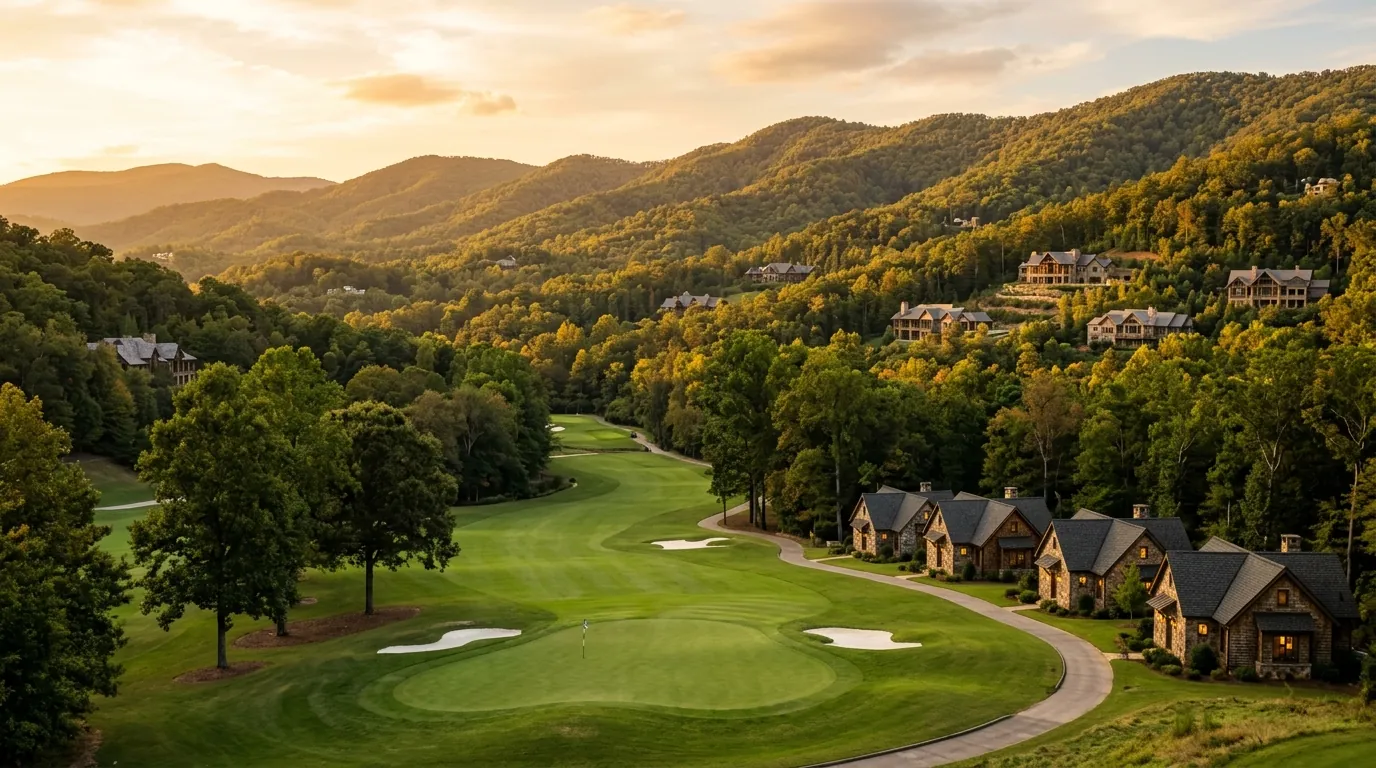
    Most conversations about a signature golf course start with the golf. In Achasta, the more interesting story is everything else the course does. The Jack Nicklaus Signature layout is the organizing feature of the community: the roads bend around it, the homes orient toward it, and the year borrows its seasons. Residents who never carry a club still live inside its influence every single day.

    That influence is mostly quiet. It shows up as green space that will not be built over, as the hush of a weekday morning when the only traffic is a maintenance cart, and as a horizon of fairway and mountain that no individual homeowner has to mow, water, or worry about. This page is about that side of the arrangement: how the course shapes the daily life of the people who live beside it.

    The backboneGreen space held in place

    The fairways work as permanent open space between homes, not just a weekend amenity.

    The calendarSeasons set the rhythm

    Spring greening, summer mornings, fall color, winter quiet: the course marks the year for the whole neighborhood.

    The identityA name that outlasts turnover

    The Signature designation anchors the community in a way that does not depend on any one resident.

    Community featureWhat it gives residentsWho benefits
    Jack Nicklaus Signature coursePermanent open landscape; shapes roads and long-view home sitesAll homeowners
    Clubhouse and social calendarEvents, dining, and standing social groups at a single walkable addressMembers; select events open wider
    Chestatee River frontageSecond permanent landscape; walking, sitting, and river accessAll residents
    Gated entranceControlled access; minimal through-traffic on community roadsAll homeowners
    Signature course upkeep standardDisciplines common-area presentation across the whole neighborhoodAll homeowners

    How the layout shapes the streets themselves

    The streets inside Achasta follow the land rather than a grid. Because the course threads the valley, the roads curve with it, and a number of them end where the fairway begins. That does two things to daily life. It slows traffic to a walking pace, and it turns ordinary dog walks and evening strolls into the community’s main social circuit. Residents know their neighbors on foot here because the layout makes walking the obvious thing to do.

    Homes tend to be sited for the long view, down a fairway, across a pond, or toward the ridgeline, which spreads the community out and gives most addresses a piece of the scenery. For the full picture of how that feels across a year, the guide to living near a signature golf course in North Georgia covers the seasonal rhythm in detail.

    What the river adds

    Achasta sits in the Chestatee River valley, and the river runs along community property. Between the course and the water, the neighborhood is bordered by two kinds of permanent landscape. That pairing is rare in the region, and it is the setting half of daily life here.

    The social calendar hangs off the club

    The course gives the community its physical shape; the club gives it its calendar. Golf events, holiday gatherings, dinners, and the casual after-round tables that form on weekend mornings all happen in the same place. For residents, that concentration matters: the social life of the neighborhood has an address, and it is a short walk or cart ride from most homes.

    The rhythm feeds itself. People join things because the things are close. A resident who moved in for the mountain views ends up on a weekly dinner list because the dining room is already there. Whether an Achasta membership is worth it is its own decision, and we treat it in its own piece. The short version is that the club is the engine of the community’s social fabric, and most residents plug into it within their first year.

    The everyday texture of that life, the mornings, the errands, the pace, is what our guide to living in Achasta covers, and it sits closest to this topic of anything on the site.

    If you never play golf

    A fair share of residents do not play, and the community still works for them. The course keeps the views open and the streets quiet. The club keeps the calendar full, and most of that calendar is not golf. The trails, the river access, and the steady draw that golf-oriented owners bring to the property story are shared by everyone who holds a deed here.

    There is a quieter benefit that residents mention once they have lived here a while: the course disciplines upkeep. A community whose centerpiece is a Signature design has a strong reason to hold its entrances, common areas, and standards high, because the whole identity rests on presentation. That pressure works in every owner’s favor, golfer or not.

    The golf is the reason many people look at Achasta. The living is the reason they stay.

    Verify before budgeting: Membership availability, fees, and waitlist conditions at the Achasta Golf Club change over time. If joining the club is a priority for you, confirm current availability and pricing directly with the club before writing your purchase offer, not after. HOA dues are set separately and should also be requested in writing from the homeowners association.

    The North Georgia context

    None of this happens in a vacuum. North Georgia holds a range of mountain communities, from quiet valley neighborhoods to resort-scale developments, and the golf-community type sits somewhere specific within that spread: more structure, more shared maintenance, more calendar. For how Achasta compares with other luxury mountain communities in North Georgia, we keep a separate comparison piece. The short version is that a signature course, a river, and a walkable small town next door is a hard combination to assemble.

    Daily life here ends up slower than most transplants expect, in the good sense. Morning fog burns off the fairway, the town square is close enough for a coffee run, and the biggest decision of a Saturday is whether to walk or take the cart. That is the course’s real work in this community: it sets a pace.

    Frequently Asked Questions

    How does a signature golf course affect daily life for non-golfers?

    Through the land, not the scorecard. The course holds open space between homes, keeps traffic slow and streets quiet, sustains the social calendar that runs through the club, and disciplines the community’s upkeep standards. Non-golfing residents get most of the benefits of the course without ever teeing off.

    What does the Jack Nicklaus Signature designation mean for residents?

    It means the community’s centerpiece carries the personal design imprimatur of Jack Nicklaus, which supports the identity and long-term draw of the neighborhood. For daily life, that translates into a durable anchor amenity that keeps attention on the community year after year. The playing side of the course belongs to the club; this site stays on the living side.

    Is the golf course the center of community life in Achasta?

    It is the physical center and the reason the calendar exists, but the social center is the clubhouse the course flows through. Events, dinners, and the standing tables that form after rounds are what residents actually experience week to week. The course shapes the stage; the club runs the show.

    Can you walk around the Achasta community?

    Yes, and walking is one of the default activities here. The roads curve with the valley and run at a walking pace, and many residents use evening strolls and dog walks as their main social circuit. Trails through the community add to that. As always, current trail and amenity details are best confirmed with the community management office.

    Does living in Achasta require a golf membership?

    The home purchase and club access are separate arrangements. Living inside the community and joining the club are different decisions, and the membership structure, including what access each level includes, is set by the club and changes over time. Request the current membership documents in writing from the club before assuming either way.

    What is daily life like in Achasta during the off-season?

    Quieter, and residents tend to like it that way. Winter mornings are slow and foggy in the valley, outdoor activity tracks the weather, and the social calendar moves indoors through the clubhouse. The community does not shut down; it downshifts, and the regulars carry the rhythm.

    How does the Chestatee River affect life in the community?

    The river runs along community property and gives the neighborhood a second permanent landscape beside the course. Residents use it for walking, sitting, and the general enjoyment of living near moving water. Our piece on how Achasta residents enjoy the Chestatee covers the river side of community life in detail.

    Do homes in Achasta face the golf course?

    Many are sited toward fairway, pond, or ridgeline views, though it varies street by street and lot by lot. The course and the valley give the community its long sightlines, which is a real part of the appeal. Buyers with a strong preference should look at individual properties rather than assuming every address has the same outlook.

    What social activities does the Achasta club host?

    The calendar is set by the club and changes constantly, so request the current schedule in writing from the club rather than planning around an article. In general terms, clubhouse communities like this one run holiday gatherings, golf events, dinners, and interest groups, and the standing tables between the scheduled events do as much social work as the events themselves.

    Is Achasta a good community for retirees who do not golf?

    It can be an excellent one. The amenities that matter most to non-golfing retirees here are the walkable layout, the river and trail access, the club calendar, and the town of Dahlonega next door. The course contributes the setting and the quiet. Whether that package fits is a personal question, but the community does not require golf to make sense of living in it.

    How close is Achasta to downtown Dahlonega?

    The community sits on the edge of Dahlonega, close enough that the town square is part of a normal week: coffee runs, dinner, errands, the occasional festival stroll. Precise drive times depend on route and season, so treat this as orientation. The town itself is covered in our resident’s guide to what is near Achasta.

    Ready to explore Achasta?

    Discover Dahlonega, North Georgia properties with Gold Peach Realty or call (770) 283-1223.

  • Cost of Living in Achasta: HOA, Membership & Taxes Explained

    Cost of Living in Achasta: HOA, Membership & Taxes Explained

    What does it cost to live in Achasta? HOA dues, golf membership for the Jack Nicklaus Signature course, and Lumpkin County taxes explained for buyers.

    Read the full guide here

    Quick answer (TL;DR)

    Living in Achasta involves three cost layers: HOA dues covering the gated entrance, grounds, and shared amenities; an optional golf membership for the Jack Nicklaus Signature course along the Chestatee River; and Lumpkin County property taxes, which tend to run below Georgia’s metro averages. Home prices range broadly from the upper $600Ks into the multi-millions. Always request the HOA’s current fee schedule before making an offer.

    Achasta is a gated golf community in Dahlonega, Georgia, built around an 18-hole Jack Nicklaus Signature course and bordered by the Chestatee River. Three layers drive the cost of living there: HOA dues, optional golf membership, and Lumpkin County property taxes.

    What you’re actually paying for at Achasta

    The cost of living in Achasta comes from three distinct layers, each billed and managed separately. Buyers who conflate HOA dues with golf membership, or forget property taxes until closing, routinely find their monthly ownership figure lands higher than expected.

    Layer 1
    HOA dues
    Covers gate staffing, grounds, and shared facilities. Paid by all homeowners regardless of club membership.
    Layer 2
    Golf membership
    Optional fee for the Jack Nicklaus Signature course, clubhouse, and dining. Billed separately from HOA dues.
    Layer 3
    Property taxes
    Lumpkin County and school district millage — paid to the county, not the HOA, on an annual schedule

    Buyers who take time to read Achasta’s community rules and HOA governance before their first site visit tend to ask sharper questions during due diligence. Understanding how these layers interact, and what each one does and does not include, makes every conversation with the HOA more productive.

    HOA dues: what the community covers

    Every homeowner at Achasta pays HOA dues, regardless of golf club membership. Those fees fund the infrastructure that makes the gated experience work: a staffed single entrance, road and landscaping upkeep, common area maintenance, and the administrative overhead of running a private residential association in the Georgia mountains.

    Specific amounts vary by lot type and are reviewed by the HOA board annually. The association can also levy special assessments for capital projects that fall outside the operating budget. A gate upgrade, road resurfacing, or major amenity renovation can all trigger one. Buyers serious about a specific property should ask for the assessment history and the most recent reserve fund study before going under contract.

    Quick Answer

    Achasta HOA dues fund gate security, road and landscape maintenance, and shared facility operations. The exact amount depends on lot classification and is set annually by the board. Contact the HOA directly for a current fee schedule, and ask specifically whether any special assessments are pending or projected.

    Getting the real number: The HOA is the only authoritative source for current dues. Request the fee schedule, the last three years of board meeting minutes, and the reserve fund study. A healthy reserve typically covers 70% to 100% of projected capital needs. A community operating well below that threshold is more likely to issue a near-term special assessment.

    Golf membership: optional, but central to Achasta life

    The Jack Nicklaus Signature 18-hole golf course is the defining amenity at Achasta, and it is not bundled into your HOA dues. Club access requires a separate golf membership paid directly to Achasta Golf Club, covering course play, clubhouse privileges, and dining at the Achasta Grill.

    The course follows the Chestatee River through the North Georgia mountains. Membership demand has historically been strong enough to create waitlist conditions at certain points. If joining the club on day one matters to you, ask about current availability before you fall in love with a property.

    The Jack Nicklaus Signature course runs alongside the Chestatee River through the community. For many residents, the course and its surrounding amenities shape the community’s social calendar regardless of whether they play golf.

    For buyers still weighing the value of club access against the added annual cost, the practical breakdown is worth reading: whether an Achasta membership is worth it for residents covers what full members typically use, which amenities are available to non-members, and how the math usually shakes out for active versus occasional golfers.

    Membership pricing, available tiers, and waitlist status are set by the Golf Club, not the HOA, and can change. Verify current figures directly with the club before budgeting a specific number into your monthly ownership cost.

    Property taxes in Lumpkin County

    Achasta sits in Lumpkin County, Georgia. Property taxes here reflect county and school district millage rates applied to the assessed fair market value of your home. Georgia generally assesses residential properties at 100% of market value, with homestead exemptions available to qualified owner-occupants that reduce the taxable figure.

    For retirees, Georgia offers several senior homestead exemptions for owners 65 and older, including income-qualified programs that can substantially cut the annual tax bill. The state also does not tax Social Security income, which matters to buyers on fixed income. Verify current Lumpkin County millage rates and the exemptions you qualify for directly with the Lumpkin County Tax Assessor before locking in any budget projection.

    Cost category What it covers How to verify
    HOA dues Gate, roads, landscaping, shared facility operations Achasta HOA — request current fee schedule
    Golf membership Course access, clubhouse, Achasta Grill dining Achasta Golf Club — confirm tiers and waitlist
    Property taxes Lumpkin County and school district millage Lumpkin County Tax Assessor website
    Homeowners insurance Structure and contents; mountain homes may carry higher premiums At least two quotes from Georgia-licensed insurers
    Home maintenance Routine upkeep, exterior work, HVAC, roof cycles Annual review with a contractor familiar with North Georgia climates

    Home prices and maintenance budgets

    Achasta properties span a wide price range. Entry-level homes, typically smaller craftsman or single-story builds on interior lots, have generally listed in the upper $600Ks to mid-$700Ks in recent market cycles. Larger homes on golf-view or river-adjacent lots have reached well into the multi-millions. Confirm any specific figure against current MLS data; prices in North Georgia’s luxury mountain segment move with broader market conditions.

    Buyers relocating from warmer or flatter climates sometimes underestimate mountain home maintenance. Homes with log or log-accented exteriors, common in North Georgia communities, require exterior refinishing, sealing, and restaining on a regular schedule. That cycle typically runs in the range of $3,000 to $8,000 every three to five years depending on the home’s size and the extent of wood exposure. Inspect the maintenance history on any property before making an offer, and factor the next service cycle into your ownership budget.

    Watch for deferred maintenance on older listings: Inspect exterior caulking, deck flashing, and roof condition on any Achasta property that has been on the market for an extended period. Mountain climates compound deferred maintenance. What reads as a cosmetic issue in spring can turn structural after a wet winter and a hard freeze.

    The financial picture only tells part of the story. To understand what daily life in Achasta actually looks like, how residents use the amenities, where they spend time in Dahlonega, and what the pace of the community feels like across seasons, that guide covers the texture the cost tables can’t.

    Budgeting for retirement at Achasta

    Achasta draws a high share of retirees and pre-retirees, and the community’s layered cost structure rewards careful planning before purchase. Buyers who only model the mortgage payment, and forget to account for HOA dues, club fees, taxes, insurance, and maintenance, regularly find the total monthly ownership cost higher than their initial estimate.

    Georgia’s tax treatment of retirement income is favorable relative to many states, and Lumpkin County’s overall cost of living runs below the Georgia metro average. Those structural advantages can offset some of the premium that comes with a gated golf community. For a closer look at how those numbers fit the actual retirement lifestyle at Achasta, including healthcare access and what the day-to-day feels like for current residents, the guide to retiring in Achasta covers the details the budget spreadsheet can’t.

    Pre-offer checklist

    Before making an offer on any Achasta property, gather: the current HOA fee schedule and the last three years of board minutes; the reserve fund study; the Lumpkin County Tax Assessor’s current appraised value for that parcel; golf club membership fees and waitlist status if you plan to join; and at least two homeowners insurance quotes from carriers familiar with mountain properties.

    Frequently Asked Questions

    How much are HOA fees at Achasta?

    HOA dues at Achasta cover gate staffing, road and landscape maintenance, and shared facility operations. The exact amount varies by lot type and is set annually by the HOA board. Contact the Achasta Homeowners Association directly for the current fee schedule. That is the only authoritative source for a number you can rely on when budgeting.

    Is golf membership included in HOA dues?

    No. Golf membership at Achasta is a separate, optional fee paid to Achasta Golf Club. It covers access to the Jack Nicklaus Signature 18-hole course, the clubhouse, and dining at the Achasta Grill. HOA dues and club fees are billed independently; you can live at Achasta without holding a club membership.

    What are property taxes like in Lumpkin County, Georgia?

    Property taxes reflect Lumpkin County and school district millage rates applied to the home’s assessed fair market value. Rates and available exemptions change periodically. Verify current millage directly with the Lumpkin County Tax Assessor, and ask about senior homestead exemptions if you qualify.

    Does Georgia offer property tax relief for retirees at Achasta?

    Yes. Georgia provides several senior homestead exemptions for qualified homeowners age 65 and older, which can meaningfully reduce the taxable assessed value. Specific amounts vary by county and income level. Contact the Lumpkin County Tax Assessor for current qualifying criteria and the application process.

    What is the typical home price range at Achasta?

    Achasta properties have generally ranged from the upper $600Ks for smaller interior-lot homes to well into the multi-millions for larger golf-view or river-adjacent estates. Confirm current pricing against active MLS listings; North Georgia’s luxury market moves with broader conditions.

    Are there maintenance costs specific to Achasta homes?

    Yes, particularly for homes with log or log-accented exteriors. Exterior refinishing, sealing, and restaining typically runs in the range of $3,000 to $8,000 every three to five years depending on the home’s size and wood exposure. Ask sellers for the maintenance history and factor the next service cycle into your purchase budget.

    Can I rent out my Achasta home to generate income?

    The HOA covenants decide short-term-rental rights in Achasta. We have not checked the latest covenant text, so do not count on a home being rentable short term; get the current covenants from the HOA in writing. Any long-term rental restrictions should be confirmed in the same request.

    What does homeowners insurance typically cost for an Achasta property?

    Premiums depend on the home’s size, construction type, roof age, and the carrier’s risk assessment for North Georgia mountain properties. Homes with log or wood exterior elements may carry higher premiums than comparable square footage in an urban market. Get at least two quotes from carriers experienced with Georgia mountain properties before budgeting a specific figure.

    Should I worry about special assessments at Achasta?

    HOAs can levy special assessments for capital projects outside the regular operating budget, such as road work, gate systems, or amenity upgrades. Ask the HOA for the last three years of board meeting minutes and the most recent reserve fund study. A reserve funded at 70% or above of projected capital needs is a favorable sign. Significantly lower, and a special assessment in the near term becomes more likely.

    How does Achasta’s cost of living compare to other North Georgia mountain communities?

    Achasta sits at the upper end of North Georgia’s gated community market, reflecting the Jack Nicklaus Signature course, the Chestatee River setting, staffed gate access (confirm current gate hours with the HOA), and the overall community infrastructure. Compare communities on total cost of ownership, including HOA, membership, taxes, and maintenance combined, rather than on purchase price alone.

    Is the golf course at Achasta public or private?

    The Achasta Golf Club operates as a semi-private facility. Membership is required for regular play, but select tee times may be available to outside guests. Confirm current access policies directly with the club, as availability and terms can change with membership demand and seasonality.

    Do I have to join the golf club to live at Achasta?

    No. Golf membership is entirely optional for Achasta residents. Some homeowners never join the club; others join before they close because course access was the primary draw. HOA membership, which funds the gate, roads, and common areas, is mandatory for all homeowners.

    Thinking through what Achasta ownership would cost?

    Browse Dahlonega, North Georgia real estate with Gold Peach Realty (770) 283-1223
  • What Do Achasta’s HOA Covenants Mean for Homeowners, and How Does the Architectural Review Process Work?

    What Do Achasta’s HOA Covenants Mean for Homeowners, and How Does the Architectural Review Process Work?

    Understand how Achasta’s HOA covenants govern the community, what architectural review approvals typically require, and key questions to ask before closing.

    Read the full guide here
    Quick answer (TL;DR)

    Achasta’s HOA covenants and governing documents set the community’s standards for architecture, landscaping, and conduct. Before buying or planning any exterior project, request the current declarations, amendments, and Architectural Review Board guidelines from the association. The ARB reviews proposed changes before work begins. Covenant language has not been independently verified; request current documents in writing from the HOA for every specific question.

    Achasta’s HOA covenants establish standards for architecture, landscaping, and resident conduct across the community. The Architectural Review Board approves exterior changes before work begins. Always request current governing documents directly from the association before any purchase or renovation decision.

    What do HOA covenants cover in a community like Achasta?

    HOA covenants, formally recorded as declarations and their amendments, define the rules that apply to every property in the community. They address exterior aesthetics, landscaping standards, the types of structures permitted, how common areas are maintained, and how residents relate to shared assets. In a private golf community set along the Chestatee River in Dahlonega, those standards tend to be more detailed than in a conventional subdivision.

    Covenants are recorded legal instruments. When you buy a home in Achasta, you take title subject to whatever is currently in those documents. The word “current” carries real weight; governing documents can be amended, and a description from a listing, a neighbor, or an older article reflects one person’s understanding at one point in time.

    CovenantsRules governing use, appearance, and conduct for every property in the community
    DeclarationsThe foundational recorded legal documents that bind all owners at closing
    ARBThe Architectural Review Board that approves exterior changes before work begins
    What covenants generally govern

    Declarations typically address exterior changes, landscaping, permitted structures, signage, vehicle storage, and amenity use. They generally do not regulate interior renovations invisible from outside. Confirm which categories apply to the specific property from the current association documents.

    The broader Achasta community rules and resident life overview covers how the full document set shapes day-to-day life. This article focuses on the covenant and ARB questions buyers and current homeowners ask most often.

    How does the Architectural Review Board process work?

    Most HOA communities with design standards maintain an Architectural Review Board — sometimes called an Architectural Control Committee — that reviews proposed exterior changes before any work begins. The board applies the community’s recorded design guidelines to each submission and issues a written determination.

    The process follows a defined sequence. Submitting plans and receiving written approval before breaking ground is the standard expectation. Working without approval, or proceeding when an application is still under review, can lead to required restoration at the owner’s expense and formal enforcement action under the governing documents.

    1. Review current guidelinesRequest the ARB or ACC guidelines from the association before planning anything. The guidelines tell you what to submit and what the board evaluates.
    2. Prepare complete plansGather drawings, materials specifications, dimensions, and any other information the guidelines require. Incomplete submissions typically cannot be reviewed.
    3. Submit the applicationUse the association’s current form and process. Confirm the submission address, contact, and any applicable fees directly with the association.
    4. Wait for written approvalVerbal reassurances from a neighbor or contractor do not substitute for written approval from the ARB. The written document authorizes the project.
    5. Begin only after approvalStarting work before written approval arrives puts the project at risk, regardless of how routine the change appears.
    6. Document completionSome associations require a completion notice or inspection. Confirm close-out steps from the current guidelines before you begin.
    Written approval comes before the first shovel

    A project that looks routine may still require formal ARB review under the governing documents. The cost of reversing unauthorized work is far greater than the time spent submitting an application and waiting for a written decision.

    What changes typically require architectural review?

    The specific list varies by association and changes when governing documents are amended. As a general guide, most ARB processes in private residential communities focus on changes that affect the exterior appearance of a home or lot as seen from streets, common areas, or neighboring properties.

    Type of changeTypically requires ARB review?What to confirm
    New structure or additionYes, in most communitiesPlans, setbacks, materials, and footprint
    Exterior paint or finishOften yesCurrent approved palette or approval process
    Fence, wall, or screeningOften yesHeight, materials, and location rules
    Driveway changesOften yesSurface material and footprint limits
    Landscaping alterationsDepends on scopeWhich changes exceed the review threshold
    Garage door replacementVariesStyle and material approval requirements
    Interior renovationsTypically noConfirm if any portion is visible from outside

    A useful ARB question names the exact document section governing the proposed change, what the board needs to evaluate it, and how long review typically takes under current practice.

    Understanding what buyers should know before moving to Achasta connects the covenant requirements to the broader picture of ownership in the community. The ARB process is one part of that picture — not a separate concern to address after closing.

    How do covenants shape day-to-day life in Achasta?

    For most residents, covenants stay in the background. Once a home is in proper condition and no project is underway, daily life rarely turns on what the governing documents prohibit. The Jack Nicklaus Signature 18-hole golf course, the Chestatee River corridor, and the wooded North Georgia foothills are what most residents name first when they describe living in Achasta, not the rulebook.

    Where covenants become visible is when a homeowner wants to make a meaningful change: adding a sunroom, updating a driveway, changing the landscaping plan. Having a clear sense of the review process before starting separates a smooth project from one that stalls while approvals are sorted out after the first wall goes up.

    Covenants also shape what prospective buyers see on a tour. Consistent architectural standards and maintained common areas are typically the result of an active association and enforced governing documents, not an accident. That consistency is part of what supports long-term property values in a private community like Achasta.

    Covenants exist in a recorded document, not in community memory

    What a neighbor, listing agent, or longtime resident says about what’s permitted reflects their understanding at one point in time. The governing documents — and any amendments — are the authoritative source. Request the current version from the association.

    If you are weighing how the community’s structure affects daily experience, it also helps to know whether Achasta is a gated community and how that relates to the association’s role in managing access and shared standards.

    What documents should buyers request before closing?

    Covenants become your obligation on the day you close. There is no grace period to review them afterward, and the assumption that a summary captured the key points is not a substitute for reading the current documents yourself.

    Document request list for buyers

    Request from the association: current declarations and all amendments, bylaws, rules and regulations, ARB guidelines, budget and reserve information, recent meeting records, and an account statement for the property. Request from the seller: any pending ARB applications, open enforcement matters, or disclosed changes under discussion that may affect the transaction.

    Your closing attorney can explain which recorded instruments affect title and what the association statement means for the transaction. The practical step before making an offer is to read the declarations and identify the sections governing what you plan to do with the property. If you expect to make changes, request the ARB guidelines and ask the association what a review for your specific project would require.

    Frequently Asked Questions

    What are HOA covenants, and how do they apply in Achasta?

    HOA covenants are recorded legal documents (typically called declarations and their amendments) that govern how properties in the community may be used and maintained. When you buy a home in Achasta, you take title subject to the covenants currently in place. Request the current declarations from the association before closing; do not rely on summaries from a listing or a third party.

    What does the Architectural Review Board do?

    The Architectural Review Board (sometimes called the Architectural Control Committee) reviews proposed exterior changes against the community’s design guidelines before any work begins. Its role is to evaluate compliance with current standards, not to design the project for you. Submit a complete application and wait for written approval before starting any covered project.

    What kinds of exterior changes typically require ARB approval in Achasta?

    Most ARB processes cover new structures or additions, exterior paint or finish changes, fences and screening, driveway alterations, and significant landscaping work. The exact list lives in the governing documents. When in doubt, ask the association whether a specific project requires a formal submission before beginning any work.

    Can I start a project before receiving ARB approval?

    Starting work before receiving written ARB approval carries real risk regardless of how straightforward the project seems. Unauthorized work may require restoration at the owner’s expense and can result in formal enforcement under the governing documents. Obtain written approval first, then begin.

    How do I apply for ARB approval at Achasta?

    Request the current ARB or ACC guidelines from the association. Those guidelines cover the required form, submission process, materials needed, any fees, and the typical review timeline. Each of those details should come from the current documents, not from a previous owner’s experience or secondhand account.

    Are Achasta’s governing documents publicly available?

    Recorded declarations and amendments are typically filed with the county and may be located through public records. For current versions, complete amendments, and supplemental rules or guidelines, request directly from the association. A recorded document search may not capture subsequent amendments unless you confirm the search runs through the current date.

    Can the HOA covenants be amended?

    Yes. Most governing documents allow amendments through a defined process, typically requiring a vote of the membership or board. An amendment changes the operative rules from that point forward. Ask the association whether any amendment has been proposed, approved, or is currently in effect that was not reflected in the version you reviewed.

    Can I rent my Achasta home on a short-term basis?

    The HOA covenants decide short-term-rental rights in Achasta. We have not checked the latest covenant text, so do not count on a home being rentable short term; get the current covenants from the HOA in writing.

    How do covenants affect landscaping choices at Achasta?

    Landscaping standards vary by community and can include provisions on plant types, lawn maintenance, hardscape materials, and the scope of changes that trigger ARB review. Request the current landscaping-related rules and ARB guidelines from the association before planning any significant work on the yard or lot.

    What should I do if a neighbor’s project appears to violate the covenants?

    The association is responsible for enforcing the governing documents. Report your concern in writing to the appropriate association contact and let the formal process proceed. Enforcement is an HOA function, not a neighbor-to-neighbor matter.

    What documents should I request before buying an Achasta home?

    Request the current declarations and amendments, bylaws, rules and regulations, ARB guidelines, budget, reserve information, recent meeting records, and a property account statement. Have your Georgia closing attorney review title, recorded instruments, and the association statement as part of the transaction.

    Who can help me understand Achasta’s HOA documents before making an offer?

    A local real-estate professional familiar with Achasta can help you organize the right questions. For document interpretation, title review, and advice on what each instrument means for the transaction, work with a Georgia closing attorney. The association itself is the source for current documents and process questions; they are not interchangeable with agents, neighbors, or online summaries.

    Thinking about buying in Achasta or the Dahlonega area?

    Gold Peach Realty knows the North Georgia market — from HOA due diligence to finding the right home for the right buyer.

    Get a free North Georgia home valuation from Gold Peach Realty

    or call (770) 283-1223

  • Is an Achasta Membership Worth It If You Already Live There?

    Is an Achasta Membership Worth It If You Already Live There?

    Already living in Achasta and weighing club membership? Here is how residents decide, what membership adds beyond HOA access, and what to confirm first.

    Read the full guide here
    Quick answer (TL;DR)

    For most Achasta residents the answer turns on how often you will actually use the clubhouse and social calendar, not on whether you play golf. Membership is a recurring cost layered on top of HOA dues, so the households who find it worth it are the ones who treat the club as their default social hub. Residents who mostly enjoy the setting, the trails, and the quiet often decide it is not. Give yourself a full season before committing.

    Whether an Achasta membership is worth it depends on how often you will use the clubhouse socially, not on whether you golf. It is a recurring cost on top of HOA dues. Residents who use the club as their main social hub get the most from it.

    The question residents actually ask

    People researching Achasta before they buy tend to ask what the membership options are. People who already live here ask something different and harder: given that I am already paying HOA dues and already live inside the gates, what does membership add that I do not have?

    That is a fair question and it deserves a straight answer rather than a brochure. The short version is that membership buys access and belonging to the club as an institution, while your HOA dues buy the community infrastructure around your home. They are different products that happen to sit on the same property.

    If the difference between the two is still fuzzy, our breakdown of how HOA dues and membership tiers relate is the place to start before you read further here.

    What you already have as a homeowner

    Living in Achasta already gives you the things that drew most people here in the first place. You have the setting, a gated community wrapped around a Jack Nicklaus Signature course in the Chestatee River valley outside Dahlonega. You have the roads, the gate, and the common areas your HOA dues maintain. You have the walkability and the quiet.

    You also have Dahlonega itself a few minutes away, with its square, its restaurants, and its calendar of town events. A meaningful number of residents build their social life primarily around the town rather than the club, and they are not missing out on the reason they moved here. We wrote separately about residents who never touch the course and are entirely happy.

    What membership actually adds

    Membership changes your relationship to the clubhouse and to the club’s social structure. Depending on the tier, that generally means some combination of the following:

    • Clubhouse access on your own terms. Being able to walk in for a meal or a drink without arranging sponsorship each time.
    • The social calendar. Member events, seasonal functions, and the standing groups that form around them. For many households this is the real product.
    • Amenity access beyond the course. Depending on tier, the fitness and recreation facilities that are club-run rather than HOA-run.
    • Guest privileges. The ability to host visiting family and friends at the club, which matters more than people expect once relatives start visiting.
    • Golf access, if you want it. Relevant only if you play, and priced accordingly.
    Confirm the tiers yourself

    Club membership structures are revised periodically and we do not publish fee figures or tier definitions here without a current authoritative source. Ask the club for the present schedule in writing before you budget around any number you read anywhere.

    The honest cost question

    Membership is a recurring commitment layered on top of dues you are already paying, and in many club communities it involves an initiation component as well as ongoing dues. That is the part worth thinking through carefully, because the decision compounds over years rather than being a single purchase.

    The useful exercise is not comparing the dues against a restaurant bill. It is asking how many times per month you would realistically use the club, and being honest about the answer rather than the aspirational one. Households that use the clubhouse weekly tend to feel the value clearly. Households that manage once a month usually do not.

    Who tends to find it worth it

    Patterns show up among residents who are glad they joined:

    • People who moved here without a local network. Membership is the fastest route into one. Relocators from out of state consistently report this as the deciding factor.
    • Households that entertain. If visiting family is a regular feature of your year, guest privileges do real work.
    • Golfers, obviously. If you play with any regularity, the calculation is simpler and mostly comes down to rounds per season.
    • Retirees structuring a week. A standing social calendar has value when your schedule is otherwise open. Retirees weighing the same question often land here.

    Who tends to skip it

    The other pattern is just as consistent, and nobody in this group seems to regret the choice:

    • Part-time residents. If the house is a seasonal or weekend property, recurring dues buy access you are not present to use.
    • Households already anchored in Dahlonega. If your friends, church, and standing plans are in town, the club is duplicating something you have.
    • People who bought for the quiet. A meaningful share of residents chose Achasta for the setting and the trails rather than the social program, and they use what daily life inside the gates looks like exactly as it comes.
    • Anyone still inside their first year. Not a permanent category, just a timing one. See below.

    A practical way to decide

    If you are new to the community, give yourself a full seasonal cycle before committing. Achasta in July and Achasta in January are different places, and the club’s role in your week changes with them. A decision made in your first enthusiastic month is a decision made on incomplete information.

    • Track your actual usage. For three months, note every time you would have used the clubhouse if you had access. The number is usually lower than expected and it is the number that matters.
    • Attend as a guest first. Neighbours sponsor guests routinely. Go a few times before you buy in.
    • Ask about tier changes. Find out whether you can move between tiers later and what that costs, so a starting choice is not a permanent one.
    • Get the current schedule in writing. Dues, initiation terms, and what each tier includes, dated and from the club.
    • Ask what happens when you sell. Transfer rules vary and they affect a future buyer, so the answer belongs in your file regardless of what you decide now.

    Frequently Asked Questions

    Is club membership required if I own a home in Achasta?

    Whether any membership tier is mandatory for homeowners is governed by the community’s covenants and current club policy. Read the CC&Rs and confirm with the HOA and the club in writing rather than relying on a listing description or a third-party summary.

    What is the difference between HOA dues and club membership?

    HOA dues fund the community infrastructure around your home, including common areas, gate operations, and road maintenance. Club membership buys access to the club as an institution, meaning the clubhouse, the social calendar, and depending on tier the recreation facilities and golf.

    How much does an Achasta membership cost?

    We do not publish membership figures because we have no current authoritative schedule on file, and club fee structures are revised periodically. Request the present schedule directly from the club in writing.

    Do I need a membership to use the pool or fitness facilities?

    It depends on whether a given amenity is HOA-run or club-run, which varies by community and can change. Ask specifically which facilities your HOA dues already cover before assuming membership is required for any of them.

    Is membership worth it if I do not play golf?

    It can be, because the clubhouse and social calendar are the main draw for many non-golfing members. The question is how often you would use them. Residents who treat the club as their default social hub generally find the value clearly; occasional users often do not.

    Can I try the club before joining?

    In most club communities neighbours can sponsor guests, so attending a few times before committing is normal and sensible. Ask a neighbour or the club how guest visits work.

    How long should I live in Achasta before deciding?

    A full seasonal cycle is a reasonable benchmark. Summer and winter use patterns differ substantially in a North Georgia mountain community, and a decision made in your first month rests on incomplete information.

    Can I change membership tiers later?

    Many clubs allow movement between tiers, sometimes with conditions or fees. Ask about this before you join, because it determines whether your initial choice is reversible.

    Does membership transfer when I sell my home?

    Transfer rules vary by club and directly affect what a future buyer inherits. Get the current transfer terms in writing and keep them with your closing documents regardless of whether you join.

    Do most Achasta residents hold a membership?

    We do not have verified participation figures and will not estimate one. Anecdotally the community includes both committed club members and residents who use the club rarely or never, and both groups report being satisfied with their choice.

    Is the clubhouse the only social option in the community?

    No. Many residents build their social life around Dahlonega itself, which is a few minutes away and has a walkable square, restaurants, and a steady calendar of town events.

    What should I ask the club before joining?

    Ask for the current dues and initiation terms in writing, what each tier includes, whether you can change tiers later and at what cost, how guest privileges work, and what happens to the membership when you sell the house.

    Looking at homes in Achasta or around Dahlonega?

    Gold Peach Realty works with buyers across Dahlonega, Lumpkin County, and the surrounding North Georgia communities.

    Search all Dahlonega homes for sale at Gold Peach Realty

    Call (770) 283-1223.

  • What Outdoor Amenities Do Achasta Residents Actually Use?

    What Outdoor Amenities Do Achasta Residents Actually Use?

    Discover which outdoor amenities Achasta residents in Dahlonega, GA actually use, from community walking paths and ponds to Chestatee River access.

    Read the full guide here
    Quick answer (TL;DR)

    Achasta residents in Dahlonega, GA make daily use of the community’s walking paths, pond-side grounds, and Chestatee River corridor. The Jack Nicklaus Signature golf course shapes the landscape for non-golfers too, providing open space and good walking routes through maintained grounds. Outdoor life here follows the natural setting rather than a fixed facility schedule. Confirm current access to any specific amenity directly with the HOA or club.

    Achasta sits along the Chestatee River in Dahlonega, Georgia, where the Jack Nicklaus Signature golf course landscape, community walking paths, and river access define how most residents spend outdoor time each day.

    How outdoor space works at Achasta for non-golfers

    Achasta centers on an 18-hole Jack Nicklaus Signature golf course and the Chestatee River running through the property. Residents who don’t play golf still find outdoor life built into the daily community rhythm. Fairway corridors, maintained grounds, pond edges, and the river itself provide a natural backdrop that many buyers don’t fully appreciate until they’re living there.

    The useful distinction when evaluating the community is that outdoor amenities are tied to the natural setting rather than a formal facility list. Residents are less likely to describe checking off equipment at a recreation center and more likely to describe a morning walk that passes a water feature, a stretch of riverbank, or a long view across open maintained space. Buyers who want that kind of daily outdoor access tend to find it here. Buyers expecting a labeled trail system with posted distances should confirm exactly what’s available before committing.

    What makes the outdoor setting different here?

    The combination of Jack Nicklaus Signature course grounds and Chestatee River access creates maintained natural space that most North Georgia foothills communities don’t offer together. That pairing gives residents an outdoor backdrop that doesn’t require driving off-property for a decent walk or a view of open water.

    Walking pathsCommunity roads and path edges through maintained golf-course landscape give residents a practical daily route.
    Chestatee RiverRiver access is one of the most-referenced outdoor features among residents who fish, kayak, or walk the bank.
    Open groundsPond-side areas, fairway corridors, and landscaped common space extend the outdoor footprint beyond any single facility.

    Walking paths and daily routes inside the gates

    Walking is the outdoor activity most residents mention first. The internal road layout and the golf course grounds make it practical to take a quiet morning walk without leaving the community. This article doesn’t claim a specific trail mileage or a maintained trail map. Residents walk on community roads, around ponds, and through open common areas rather than a labeled trail system with directional markers.

    In practice, the experience is quieter and more informal than a public park trail. Early morning is a common window because traffic inside the gates is light and the golf course grounds are largely still. Evening routes along pond edges or near the clubhouse area are also a regular pattern. Buyers who visit during a weekend afternoon may find the pace and character different from a Tuesday morning, which is worth noting if a quiet walk is a meaningful part of the appeal.

    For a broader picture of what resident life involves day to day, the living in Achasta guide covers the full community context beyond any single amenity.

    The quality of a morning walk at Achasta is mostly a function of the setting, not of posted distances or numbered waypoints.

    The Chestatee River as an outdoor anchor

    The Chestatee River runs through Achasta and is one of the features that separates it from inland golf communities without water access. Residents use the river for fishing, casual bank walks, and, depending on season and current conditions, kayaking. This article doesn’t assert specific access points, permitted watercraft, or current facility rules. Those details belong with the HOA since access points and rules can shift.

    What the river adds to the outdoor picture is a consistent draw. On a warm morning, it gives residents a direction to walk toward. For households with visiting family, it can anchor an afternoon without needing a scheduled activity. For fishing households, it can become part of a weekly habit depending on season and what’s running in the water.

    For more on how residents use the river day to day, see how Achasta residents engage with the Chestatee River.

    The river is a community feature, not a private amenity. Residents encounter each other along the bank without any scheduling requirement. That casual shared quality is part of what makes it worth understanding before you buy, separate from any organized activity program.

    Other outdoor features residents use

    Beyond walking routes and the river, a few other outdoor amenities round out the picture. Tennis and pickleball courts give residents court-based outdoor options without leaving the gates. For a resident overview of what those options look like, see the Achasta pickleball and tennis guide. The detailed vertical for court play lives elsewhere; this overview stays at the community level.

    Pond areas within the community attract casual fishing, particularly from residents who find informal bank fishing a lower-commitment outdoor option than the river. Landscaped areas near the clubhouse and the community entry provide another outdoor corridor for a short walk, a morning coffee outside, or a stopping point between activities.

    Activity typeCommon settingWhat to confirm before assuming access
    Walking / morning routeCommunity roads, pond edges, fairway perimeterQuiet windows and whether early gate access applies
    River fishing or bank walkingChestatee River corridorCurrent access points, permitted watercraft, seasonal conditions
    Tennis / pickleballOn-site courtsCurrent reservation system, court availability, guest policies
    Pond area / informal fishingPond-side common spaceWhether fishing is permitted and any applicable rules
    Open-air leisureClubhouse grounds, landscaped entry areasEvent schedules that may affect common-area availability
    Does outdoor access require a golf membership?

    Golf course facilities are separate from the community’s common areas. Residents without memberships still use community roads, pond-side grounds, and river access. Membership requirements for specific facilities are a club question. Confirm the current rules directly rather than assuming they follow a general pattern.

    Is there a formal trail system at Achasta?

    Achasta doesn’t publish a labeled trail system with posted distances the way a state park or dedicated trail community would. Residents walk on community roads and along the natural landscape. If a specific maintained trail is important to your decision, verify what’s currently accessible before buying.

    What to visit and ask before buying

    Buyers who rely on a listing or website description to evaluate outdoor amenities often find the experience different once they’re inside the gates on an ordinary day. The gap between an outdoor feature described in marketing and that same feature on a quiet Tuesday morning is worth testing in person. Walking a realistic route from a prospective home, spending time at the Chestatee River at a time you’d realistically use it, and gauging whether the grounds feel right for your daily pace are all more informative than a written summary.

    For a fuller picture of the community and what its amenities include, the Achasta community amenities overview covers the broader context.

    1. Walk at the time of day you would actually use outdoor space, not just during a midday tour.
    2. Ask the HOA or club which specific outdoor access points are currently available to residents and guests.
    3. Visit the Chestatee River area and observe whether the setting matches what you expected from the listing.
    4. Ask about seasonal variation since outdoor use patterns shift between summer and the North Georgia winter months.
    5. Confirm whether any outdoor areas are affected by golf operations, maintenance schedules, or event-driven closures.
    Don’t plan a routine based on what a listing implies. Outdoor access, path conditions, and river access points can all shift. A current conversation with the HOA and a real visit at an ordinary hour will tell you more than any description.

    Frequently Asked Questions

    Does Achasta have walking trails?

    Achasta doesn’t publish a formal trail map, but residents walk community roads, pond perimeters, and the Chestatee River bank as part of a regular outdoor routine. Verify current access with the HOA before assuming a specific trail setup is in place.

    Can I fish at Achasta?

    The Chestatee River runs through the community and residents do use it for fishing. Current access details, including permitted areas and seasonal restrictions, should be confirmed with the HOA directly.

    Is the Chestatee River accessible to all Achasta residents?

    River access is part of the community’s setting, but specific access points and current rules are a HOA question. Confirm what is available before buying if river access is important to you.

    What outdoor amenities do Achasta residents use most often?

    Based on the community layout, walking routes on community roads and pond-side paths, Chestatee River access, and the pickleball and tennis courts tend to feature in residents’ day-to-day outdoor habits. Your own pattern will depend on your interests and where your home sits within the community.

    Is the outdoor experience limited if I don’t golf?

    Not significantly. The Jack Nicklaus Signature golf course grounds create open space and maintained landscape that all residents benefit from. Many non-golfers use walking routes along the fairway perimeter as a regular daily habit.

    Are there ponds at Achasta?

    Yes, ponds are part of the community landscape and residents use the pond-side areas for walking and informal outdoor time. Whether fishing is permitted at specific ponds should be confirmed with the HOA.

    What is the outdoor experience like in winter at Achasta?

    The North Georgia foothills bring cooler and sometimes cold winters, but walking and river access remain available in most conditions. Usage naturally shifts by season, with different activities becoming more or less appealing as temperatures change.

    Is kayaking or tubing on the Chestatee River possible?

    The Chestatee River can support those activities depending on season and current water conditions. Permitted watercraft and put-in points should be confirmed with the HOA rather than assumed from a listing or general river guide.

    Are outdoor areas private or shared?

    Achasta is a gated community and most outdoor amenities are shared among residents. The HOA governs common-area access, and specific rules should be confirmed through current HOA documentation.

    Can residents bring pets on community roads and paths?

    Pet policies are governed by the HOA and can change. Confirm the current rules for pets on community roads and common areas before assuming a routine you plan to use daily.

    Do I need a golf membership to use outdoor common areas?

    Golf course facilities are separate from the community’s common outdoor areas. Residents without memberships still use community roads, open grounds, and the river corridor. For course-edge access or specific amenities, confirm with the club directly.

    Is Achasta near any public trails or state parks?

    Dahlonega and the surrounding North Georgia region include Amicalola Falls State Park and other public outdoor destinations within a reasonable drive. Achasta is a gated residential community rather than a trail-access development, but the regional outdoor context adds value for buyers who use public parks and trails regularly.

    Start your Dahlonega, GA home search with Gold Peach Realty and connect with an agent who knows the Achasta community firsthand. Call (770) 283-1223 to get started.

  • What Are the Seasons Like at Achasta in the North Georgia Mountains?

    What Are the Seasons Like at Achasta in the North Georgia Mountains?

    A practical guide to Achasta Dahlonega seasons and weather, from spring pollen to summer river days, fall color, and quieter winter routines.

    Read the full guide here

    Quick answer (TL;DR)

    Achasta follows the familiar North Georgia mountain rhythm: a pollen-heavy spring, warm green summers, a busy fall color season, and a quieter winter. The practical difference is how that rhythm changes daily life inside a golf-and-river community. Visit in more than one season before deciding whether the calendar fits yours.

    At Achasta near Dahlonega, each season changes the pace more than the address. Spring brings fresh growth, summer moves people outdoors, fall draws visitors to the mountains, and winter makes the community feel calmer. A first visit is useful; visits across the calendar tell the fuller story.

    SpringFresh growth and pollen planning
    SummerOutdoor time and river weather
    Fall and winterVisitor energy, then a quieter reset

    Why the calendar matters when you are considering Achasta

    Weather is one of those details that can sound generic until you are deciding where to spend an ordinary Tuesday. Achasta sits near Dahlonega in the North Georgia foothills, with the Chestatee River and the community’s golf course shaping what people notice from season to season. The weather does not dictate the place, but it does change how residents use it.

    For a relocator, the useful question is not whether the mountains have four seasons. They do. The better question is whether you like the transition between them: more activity and yard work when the landscape wakes up, warm months that encourage time outside, a fall calendar with more visitors around Dahlonega, and a slower winter stretch.

    That seasonal rhythm is part of the larger picture in daily life in Achasta. It is also a reason to make a return visit rather than treating one pleasant showing as a complete answer.

    Quick answer: when should I visit?

    There is no single best month for every buyer. A spring visit shows the landscape coming back, summer shows the outdoor routine, fall shows the wider Dahlonega visitor season, and winter shows the quieter baseline. If a purchase decision allows it, see the community in two contrasting seasons.

    Spring: beautiful, busy, and worth experiencing honestly

    Spring is when the hills around Achasta turn green again and the community begins to spend more time outdoors. It is an appealing season for a first look because the roads, fairways, and wooded areas feel newly alive. It is also the right time to notice practical things that a postcard view leaves out, especially pollen, drainage after rain, and how your own allergies respond.

    A spring showing can help a buyer understand lot orientation. Walk the exterior in the morning and later in the day. Look at the tree cover, the slope, and where water appears to move after a shower. Those are property-specific questions, so the answer belongs in inspection and due diligence, not in a general community guide.

    A useful spring checklist: Bring shoes that can handle a walk beyond the driveway. Ask to see the yard after ordinary rain if timing permits, and make space in your decision process for an inspection professional to assess the particular home.

    Summer: the outdoor version of Achasta

    Summer makes the outdoor side of the community easier to see. The golf course becomes part of the everyday backdrop, and the Chestatee River setting feels more central to a visit. A warm afternoon also gives you a more honest view of shade, porch comfort, air movement, and how far you want to walk from a particular home to the amenities you care about.

    The river is not a promise of access from every address. Access, views, and the practical condition of a particular lot vary. Buyers who are drawn to the water should ask for the exact property details and confirm what belongs to the lot, the HOA, or neither. The community overview of the Chestatee River at Achasta is a helpful starting point for the setting, but it is not a substitute for property-level verification.

    A seasonal visit is less about finding perfect weather than noticing what your normal routine would feel like when the weather is ordinary.
    Quick answer: does summer make a difference?

    Yes, because it reveals daily-use details that are hard to read on a mild day: shade, sun exposure, porch comfort, outdoor noise, and the distance between a home and the parts of the community you expect to use. Treat a summer visit as a practical test, not a vacation.

    Fall: mountain color and a more active Dahlonega calendar

    Fall is a strong season for understanding why people are drawn to the North Georgia mountains. Cooler days and changing leaves bring more movement through the wider Dahlonega area. That does not mean every corner of Achasta feels crowded, but it does mean a buyer should drive the routes they expect to use and allow extra time for a realistic read of the area.

    Within the gates, fall can be a good time to observe community habits. Are people outside when you visit? Does the pace feel social or private? Those are subjective answers, and that is fine. A community purchase is partly about fit. The Achasta lifestyle beyond golf guide offers another way to think about the non-listing side of that fit.

    SeasonWhat to observe on a visitQuestion to take home
    SpringTree cover, pollen, drainage, new growthHow does this lot handle a wet week?
    SummerShade, heat, outdoor routines, river settingWould we use these outdoor spaces?
    FallRoutes, visitor activity, neighborhood rhythmDoes the wider area feel comfortable when active?
    WinterLight, quiet, heating needs, off-season paceWould this still feel like home in a slower month?

    Winter: a quieter way to evaluate the community

    Winter can be the most revealing season for a relocation decision because it removes the easy distractions. The trees are more open, daylight feels different, and the outdoor calendar has less pull. That can help you decide whether the house itself, the drive to Dahlonega, and the general pace work for you when you are not relying on a perfect afternoon.

    For a specific property, ask the seller-side team for the normal information a buyer should have: utility history where available, maintenance records, and disclosure materials. An inspector can address the systems that matter for that home. A neighborhood article should not pretend to answer those questions in the abstract.

    Winter-weather caution: Do not assume a mountain address behaves the same as a suburb you know. Evaluate the actual driveway, slope, roof, drainage, and access route with the appropriate professionals. Conditions vary by home and by weather event.

    How to use weather in your home-search process

    Seasonal questions work best when they are tied to a decision. If gardening matters, look at sun and shade. If you expect guests, notice the route from the gate to the house and where they would park. If you want an outdoor routine, walk the distance rather than estimating it from a map. If you are moving from a flatter place, spend time on the roads you would use for errands.

    1. Visit at two different times of day, not only during a showing window.
    2. Drive the route to Dahlonega and the services you expect to use.
    3. Walk the exterior and ask property-specific questions about drainage and maintenance.
    4. Review disclosures and use qualified inspection professionals before making a decision.
    5. Ask for current HOA documents in writing when a rule, responsibility, or access question matters.

    Frequently Asked Questions

    Does Achasta have four distinct seasons?

    Achasta follows the seasonal pattern of North Georgia, with visible changes from spring through winter. The practical experience varies by a home’s elevation, tree cover, exposure, and location within the community.

    What is spring like in Achasta?

    Spring brings fresh growth and more time outside. It is also a useful season to observe pollen, drainage, and the way a particular lot receives sun and shade.

    Is summer comfortable for living in Achasta?

    Comfort depends on the home and how you use it. A summer visit can help you evaluate shade, porches, sun exposure, and the outdoor spaces that matter to you.

    Does the Chestatee River affect the feel of the seasons?

    The river setting is part of Achasta’s character throughout the year. Water conditions and access are property-specific, so confirm the details that apply to a particular home before relying on them.

    When is fall color in Dahlonega?

    Fall color timing varies with weather conditions. If leaf season matters to your decision, plan a visit rather than relying on a fixed calendar date.

    Is winter a good time to tour homes in Achasta?

    Winter can be a practical time to tour because it reveals light, tree cover, the pace of the community, and the everyday drive without the appeal of peak outdoor weather.

    Should I worry about winter access?

    Evaluate the specific driveway, slope, roof, drainage, and access route for the home you are considering. A qualified inspector and local professionals can address property-specific concerns.

    Does weather change golf activity at Achasta?

    Seasonal conditions naturally influence outdoor activity. Confirm current club access and membership details directly with the club if those details are important to your purchase decision.

    What should I ask about a wooded lot?

    Ask about sun exposure, drainage, maintenance, tree health, and the practical use of outdoor areas. These answers depend on the individual parcel and should be verified during due diligence.

    Can I rely on a listing description for seasonal details?

    Use a listing description as a starting point, then verify what matters through a visit, disclosures, inspections, HOA documents, and the professionals involved in your transaction.