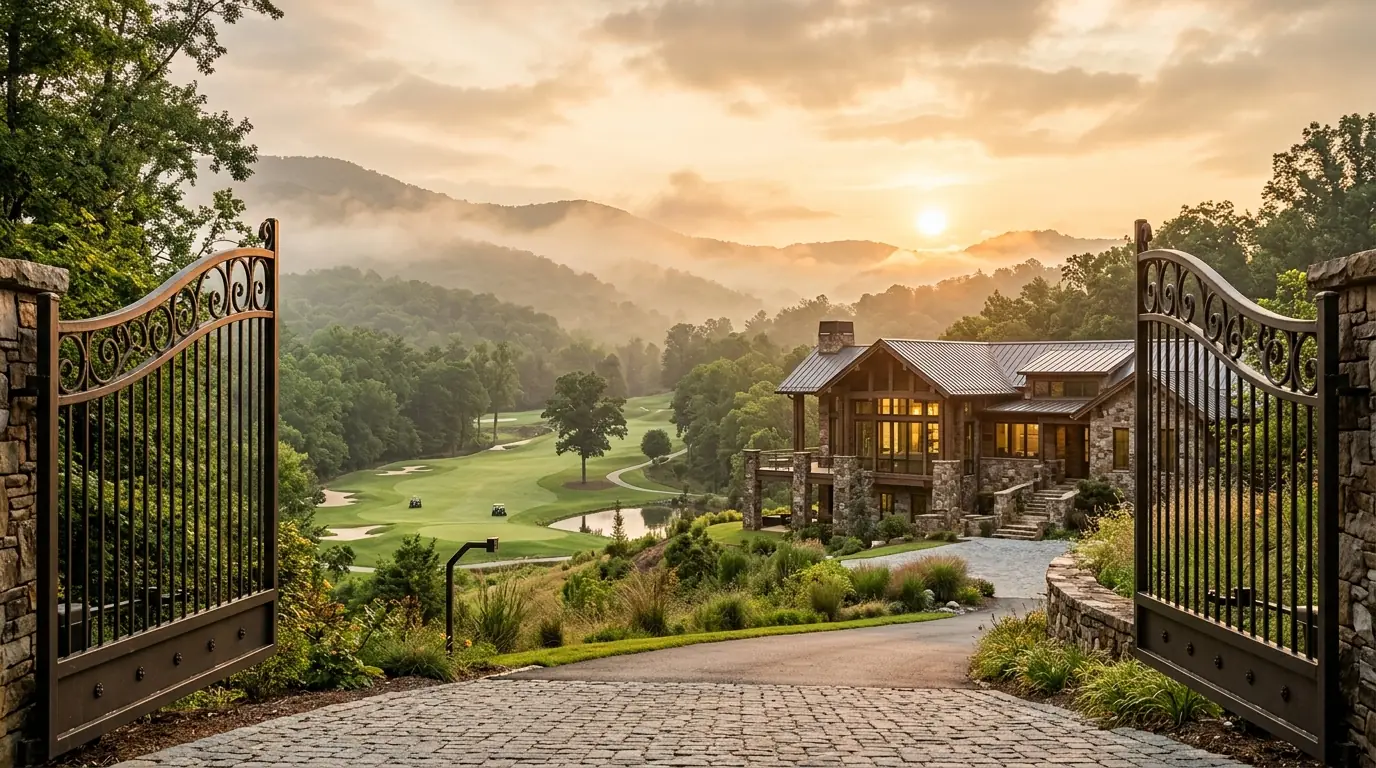
Quick answer (TL;DR)
Achasta follows the familiar North Georgia mountain rhythm: a pollen-heavy spring, warm green summers, a busy fall color season, and a quieter winter. The practical difference is how that rhythm changes daily life inside a golf-and-river community. Visit in more than one season before deciding whether the calendar fits yours.
At Achasta near Dahlonega, each season changes the pace more than the address. Spring brings fresh growth, summer moves people outdoors, fall draws visitors to the mountains, and winter makes the community feel calmer. A first visit is useful; visits across the calendar tell the fuller story.
Why the calendar matters when you are considering Achasta
Weather is one of those details that can sound generic until you are deciding where to spend an ordinary Tuesday. Achasta sits near Dahlonega in the North Georgia foothills, with the Chestatee River and the community’s golf course shaping what people notice from season to season. The weather does not dictate the place, but it does change how residents use it.
For a relocator, the useful question is not whether the mountains have four seasons. They do. The better question is whether you like the transition between them: more activity and yard work when the landscape wakes up, warm months that encourage time outside, a fall calendar with more visitors around Dahlonega, and a slower winter stretch.
That seasonal rhythm is part of the larger picture in daily life in Achasta. It is also a reason to make a return visit rather than treating one pleasant showing as a complete answer.
There is no single best month for every buyer. A spring visit shows the landscape coming back, summer shows the outdoor routine, fall shows the wider Dahlonega visitor season, and winter shows the quieter baseline. If a purchase decision allows it, see the community in two contrasting seasons.
Spring: beautiful, busy, and worth experiencing honestly
Spring is when the hills around Achasta turn green again and the community begins to spend more time outdoors. It is an appealing season for a first look because the roads, fairways, and wooded areas feel newly alive. It is also the right time to notice practical things that a postcard view leaves out, especially pollen, drainage after rain, and how your own allergies respond.
A spring showing can help a buyer understand lot orientation. Walk the exterior in the morning and later in the day. Look at the tree cover, the slope, and where water appears to move after a shower. Those are property-specific questions, so the answer belongs in inspection and due diligence, not in a general community guide.
Summer: the outdoor version of Achasta
Summer makes the outdoor side of the community easier to see. The golf course becomes part of the everyday backdrop, and the Chestatee River setting feels more central to a visit. A warm afternoon also gives you a more honest view of shade, porch comfort, air movement, and how far you want to walk from a particular home to the amenities you care about.
The river is not a promise of access from every address. Access, views, and the practical condition of a particular lot vary. Buyers who are drawn to the water should ask for the exact property details and confirm what belongs to the lot, the HOA, or neither. The community overview of the Chestatee River at Achasta is a helpful starting point for the setting, but it is not a substitute for property-level verification.
Yes, because it reveals daily-use details that are hard to read on a mild day: shade, sun exposure, porch comfort, outdoor noise, and the distance between a home and the parts of the community you expect to use. Treat a summer visit as a practical test, not a vacation.
Fall: mountain color and a more active Dahlonega calendar
Fall is a strong season for understanding why people are drawn to the North Georgia mountains. Cooler days and changing leaves bring more movement through the wider Dahlonega area. That does not mean every corner of Achasta feels crowded, but it does mean a buyer should drive the routes they expect to use and allow extra time for a realistic read of the area.
Within the gates, fall can be a good time to observe community habits. Are people outside when you visit? Does the pace feel social or private? Those are subjective answers, and that is fine. A community purchase is partly about fit. The Achasta lifestyle beyond golf guide offers another way to think about the non-listing side of that fit.
| Season | What to observe on a visit | Question to take home |
|---|---|---|
| Spring | Tree cover, pollen, drainage, new growth | How does this lot handle a wet week? |
| Summer | Shade, heat, outdoor routines, river setting | Would we use these outdoor spaces? |
| Fall | Routes, visitor activity, neighborhood rhythm | Does the wider area feel comfortable when active? |
| Winter | Light, quiet, heating needs, off-season pace | Would this still feel like home in a slower month? |
Winter: a quieter way to evaluate the community
Winter can be the most revealing season for a relocation decision because it removes the easy distractions. The trees are more open, daylight feels different, and the outdoor calendar has less pull. That can help you decide whether the house itself, the drive to Dahlonega, and the general pace work for you when you are not relying on a perfect afternoon.
For a specific property, ask the seller-side team for the normal information a buyer should have: utility history where available, maintenance records, and disclosure materials. An inspector can address the systems that matter for that home. A neighborhood article should not pretend to answer those questions in the abstract.
How to use weather in your home-search process
Seasonal questions work best when they are tied to a decision. If gardening matters, look at sun and shade. If you expect guests, notice the route from the gate to the house and where they would park. If you want an outdoor routine, walk the distance rather than estimating it from a map. If you are moving from a flatter place, spend time on the roads you would use for errands.
- Visit at two different times of day, not only during a showing window.
- Drive the route to Dahlonega and the services you expect to use.
- Walk the exterior and ask property-specific questions about drainage and maintenance.
- Review disclosures and use qualified inspection professionals before making a decision.
- Ask for current HOA documents in writing when a rule, responsibility, or access question matters.
Frequently Asked Questions
Does Achasta have four distinct seasons?
Achasta follows the seasonal pattern of North Georgia, with visible changes from spring through winter. The practical experience varies by a home’s elevation, tree cover, exposure, and location within the community.
What is spring like in Achasta?
Spring brings fresh growth and more time outside. It is also a useful season to observe pollen, drainage, and the way a particular lot receives sun and shade.
Is summer comfortable for living in Achasta?
Comfort depends on the home and how you use it. A summer visit can help you evaluate shade, porches, sun exposure, and the outdoor spaces that matter to you.
Does the Chestatee River affect the feel of the seasons?
The river setting is part of Achasta’s character throughout the year. Water conditions and access are property-specific, so confirm the details that apply to a particular home before relying on them.
When is fall color in Dahlonega?
Fall color timing varies with weather conditions. If leaf season matters to your decision, plan a visit rather than relying on a fixed calendar date.
Is winter a good time to tour homes in Achasta?
Winter can be a practical time to tour because it reveals light, tree cover, the pace of the community, and the everyday drive without the appeal of peak outdoor weather.
Should I worry about winter access?
Evaluate the specific driveway, slope, roof, drainage, and access route for the home you are considering. A qualified inspector and local professionals can address property-specific concerns.
Does weather change golf activity at Achasta?
Seasonal conditions naturally influence outdoor activity. Confirm current club access and membership details directly with the club if those details are important to your purchase decision.
What should I ask about a wooded lot?
Ask about sun exposure, drainage, maintenance, tree health, and the practical use of outdoor areas. These answers depend on the individual parcel and should be verified during due diligence.
Can I rely on a listing description for seasonal details?
Use a listing description as a starting point, then verify what matters through a visit, disclosures, inspections, HOA documents, and the professionals involved in your transaction.